


What if the most popular window material on the market isn’t actually the best fit for your specific home’s exposure to the elements? It’s easy to feel overwhelmed by technical claims when you’re just looking for peace of mind. You might worry about frames warping in the heat or leaking when the snow piles up. When you’re weighing vinyl vs fibrex windows, you aren’t just buying glass and frames; you’re investing in the long-term protection of your sanctuary. We understand that this decision feels heavy because you want your home to be more energy-efficient and beautiful for the next twenty years and beyond.
At Window Galaxy USA, we believe in a partnership built on transparency and reliable information. We’ve seen how the right material choice makes all the difference in our regional climates. This comparison breaks down the material science of our Galaxy Vinyl Windows and the Fibrex technology used in Andersen products. You’ll learn exactly how these materials handle structural stress and thermal expansion. By the end, you’ll have a clear understanding of which option fits your home’s unique needs, giving you the confidence to start your replacement project with a team that prioritizes your satisfaction.
Key Takeaways
- Learn how the material science of 100% PVC and wood-fiber composites affects your home’s long-term durability and insulation.
- Discover how different expansion rates impact structural integrity during the extreme temperature swings common in our regional climate.
- Compare the specific benefits of vinyl vs fibrex windows to determine which material provides the best thermal performance for your energy goals.
- Explore the design possibilities of smooth vinyl and textured composite frames, including modern dark exterior finishes that enhance curb appeal.
- Understand why professional installation and a collaborative partnership are the most critical factors in ensuring your new windows last for decades.
Understanding the Basics: What are Vinyl and Fibrex Windows?
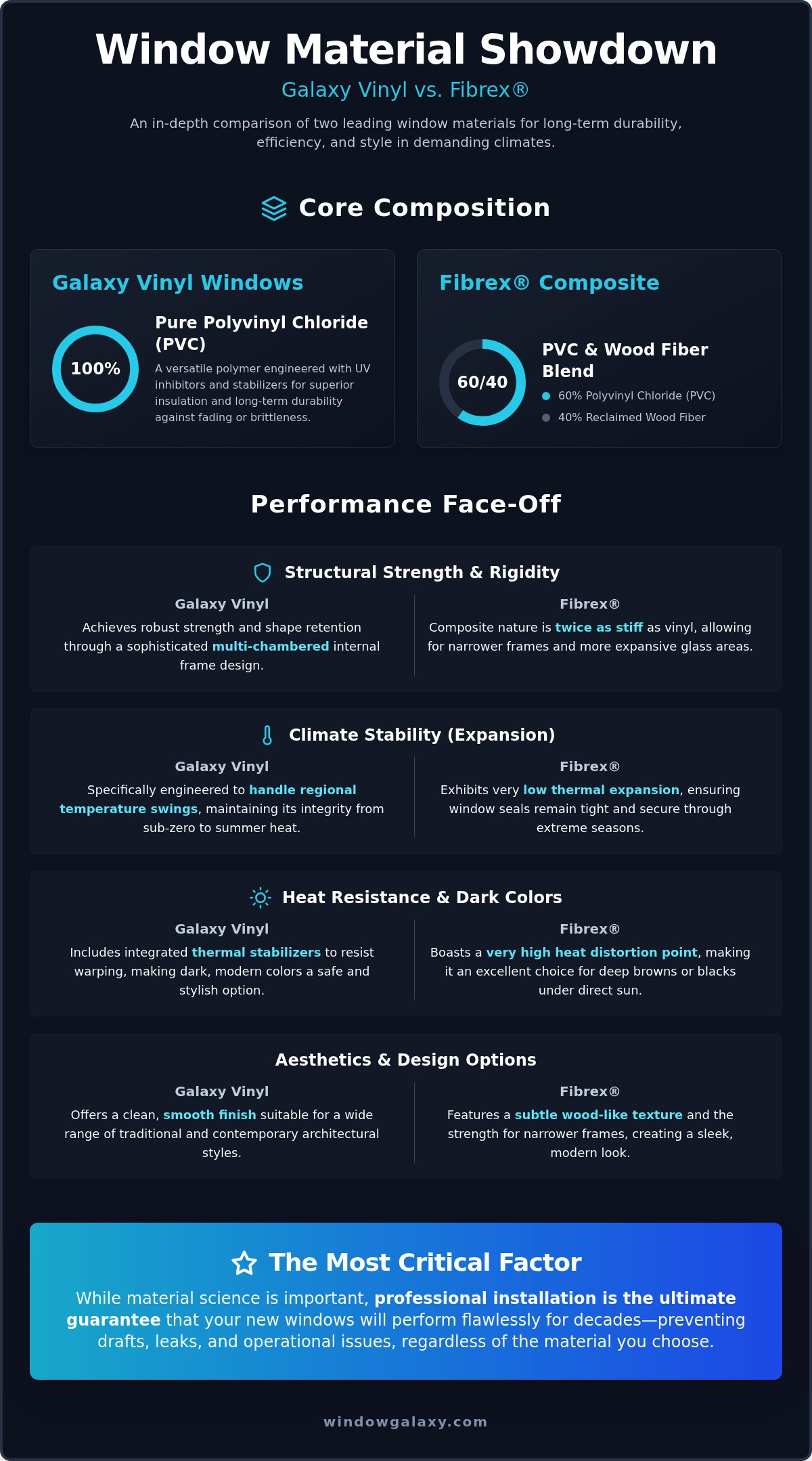
Choosing new windows is a significant step in your home improvement journey. You’ll likely hear many technical terms, but when comparing vinyl vs fibrex windows, it’s helpful to start with the basic makeup of each material. Vinyl is constructed from 100% polyvinyl chloride, commonly known as PVC. It’s a versatile material engineered for excellent insulation and long-term durability. Fibrex is a proprietary composite material. It’s crafted by blending reclaimed wood fiber with PVC to create a frame that combines the best traits of different sources. Both options are designed to be exceptionally low-maintenance. They don’t require the constant scraping or painting associated with traditional wood frames. At Window Galaxy USA, we offer premium Galaxy Vinyl Windows, and we understand the unique characteristics of Fibrex-based windows. This allows us to act as a neutral partner, helping you select the material that truly fits your home’s architecture.
The Evolution of Vinyl Windows
Modern vinyl has come a long way. If you’re picturing the thin, “plastic” windows from decades ago, you’ll be pleasantly surprised by today’s standards. Our Galaxy Vinyl Windows are engineered specifically for the regional climate. They include specialized additives that prevent UV degradation and stop the frames from fading or becoming brittle. A deep dive into window components and materials reveals why vinyl remains a top choice for homeowners. It offers a perfect balance of thermal performance and flexibility. This reliability is why vinyl is the most popular material for a window replacement project. It’s easy to clean and keeps your home comfortable in every season.
The Fibrex Composite Advantage
Fibrex represents a unique approach to material science. By combining 40% reclaimed wood fiber with 60% PVC, this material gains impressive structural rigidity. This process was developed to reduce waste by using wood fibers diverted from other manufacturing streams. The result is a frame that is twice as stiff as traditional vinyl. Fibrex is a composite that offers the strength of wood with the maintenance-free nature of vinyl. This added rigidity allows for narrower frames and more glass area. When you’re weighing vinyl vs fibrex windows, this extra strength is a major benefit for homeowners who want a sleek, modern look with expansive views. It’s a robust solution that stands up to the test of time while looking beautiful.
Structural Integrity and Performance in the Northeast
Living in New Jersey or Pennsylvania means your home faces everything from humid 90 degree days to sub zero nights. These extreme temperature swings put immense pressure on your window frames. When you’re comparing vinyl vs fibrex windows, the primary concern is how these materials expand and contract. If a material moves too much, it can eventually compromise the seal, leading to drafts or moisture issues. While some sources suggest that only composite materials remain stable, high performance Galaxy Vinyl Windows are specifically engineered to handle these regional shifts without losing their shape.
The “heat distortion point” is another critical factor, especially if you’re interested in modern, dark colored frames. Darker colors absorb more thermal energy. Fibrex has a very high resistance to heat, which makes it an excellent choice for deep browns or blacks. However, our specialized vinyl blends also include thermal stabilizers designed to resist warping even under the direct summer sun. According to Forbes Home, selecting a material that resists corrosion and environmental stress is the first step toward a long lasting installation. We believe that while material science is important, professional installation is what truly mitigates these stresses over time.
Strength and Stability Under Pressure
Fibrex is exceptionally rigid because it’s a composite material. This inherent strength allows for thinner frames and larger glass areas, which is a major draw for homeowners seeking a sleek, contemporary look. In contrast, Galaxy Vinyl Windows achieve their strength through a sophisticated multi chambered frame design. These internal pockets create a sturdy skeleton that maintains its structural shape against high winds and heavy snow. Structural stability ensures your house windows remain easy to operate for decades.
Resistance to the Elements
Both vinyl and Fibrex are champions at resisting rot, decay, and fungal growth. This is vital in our humid Northeast climate where traditional wood often fails. For those living near the Jersey Shore, salt air is a constant threat. Both materials are non corrosive and won’t pit or peel when exposed to coastal air. A proper seal during the installation process is actually more important than the material itself. If the perimeter isn’t perfectly caulked and insulated, even the most expensive frame will leak. If you’re unsure which material is best for your home’s exposure, you can start a conversation with our project managers to explore your options.
Energy Efficiency and Thermal Performance
Your windows are the primary barrier between your family’s comfort and the unpredictable Northeast weather. When homeowners weigh vinyl vs fibrex windows, they often focus solely on the frame material. It’s a common misconception that the frame does all the work. In reality, the frame is just one component of a larger energy efficiency system. Both our Galaxy Vinyl Windows and Andersen composite windows provide a massive upgrade over old, drafty wood or heat conducting aluminum frames. They act as powerful insulators that keep your furnace’s heat inside during January and your air conditioning’s cool breeze inside during July.
Thermal performance is often measured by the U-Factor, which tells you how well a window prevents heat from escaping. High quality vinyl and Fibrex frames both offer impressive U-Factor ratings. While the materials differ in composition, their ability to stop heat transfer is remarkably similar. What truly sets them apart is how the designs prevent air infiltration. Our Galaxy Vinyl models use precision engineered weatherstripping, while Andersen’s designs rely on the frame’s structural rigidity to maintain a tight seal. Either choice ensures you aren’t paying to heat the outdoors.
Thermal Conductivity and Heat Loss
Vinyl is a natural insulator. Galaxy Vinyl Windows take this a step further with a multi chambered frame design. These internal pockets trap air, creating a series of thermal breaks that make it difficult for heat to pass through the material. Fibrex works differently. Its high density provides a solid thermal break that resists conductivity through sheer mass. Both approaches are effective at keeping your home’s temperature stable. For more details on maintaining these systems, see The ultimate guide to windows replacement quality and care.
Long-Term Energy Savings
The real value of energy efficient windows shows up on your monthly utility bills. By reducing the load on your HVAC system, these windows help your equipment last longer. However, the frame material is only as good as the glass package it holds. We help you choose the right Low-E coatings and gas fills to complement your chosen frame. This holistic approach ensures your home remains draft free and comfortable. When you’re comparing vinyl vs fibrex windows, remember that the best choice is the one that addresses your home’s specific orientation and sun exposure. A window on a shaded north wall has different needs than one facing the direct southern sun.
Aesthetics and Customization Options
Your home’s aesthetic reflects your personality. Choosing between vinyl vs fibrex windows often comes down to the specific visual profile you want to achieve for your curb appeal. Galaxy Vinyl Windows offer a clean, smooth finish that looks crisp and intentional on modern homes. On the other hand, Fibrex frames feature a unique, matte texture that closely mimics the look of traditional painted wood. Both materials provide a massive upgrade in style without the headache of constant upkeep. We prioritize helping you find the right balance between frame thickness and the “daylight opening,” which is the total amount of glass you see. Because Fibrex is so rigid, it can support larger panes of glass with a thinner frame, whereas vinyl frames are slightly wider to provide the necessary multi-chambered insulation we discussed earlier.
One common myth is that vinyl is only available in white or tan. This is no longer true. Modern manufacturing allows us to offer Galaxy Vinyl Windows in a wide array of colors, including the deep bronzes and blacks that are currently trending. When comparing vinyl vs fibrex windows, you’ll find that both materials excel in color variety. Andersen’s Fibrex finishes are baked into the material to resist fading, even on southern-facing walls. Using custom windows ensures that every detail, from the color to the grid pattern, matches your home’s unique architectural requirements perfectly.
Matching Your Home’s Style
Architecture dictates the best material choice. Fibrex is frequently the preferred option for historic or traditional homes in NJ and PA because its wood-like texture honors the original design. If you own a contemporary home with sharp lines, the smooth, sleek surface of Galaxy Vinyl Windows often provides a more cohesive look. You can further elevate either material with high-quality hardware finishes like brushed nickel, oil-rubbed bronze, or classic brass. These small details act as the jewelry for your windows, tying the whole room together.
Color Retention and Maintenance
The best part about these materials is that they never need painting or staining. The color is integrated directly into the frame during the extrusion process. This means that if a stray branch ever scratches the surface, the color goes all the way through, making the mark nearly invisible. Maintaining that “new window” look is incredibly simple. You don’t need specialized chemicals or hours of labor. A quick wipe with mild soap and water is usually all it takes to keep both vinyl and composite frames looking pristine for decades. If you’re ready to see these finishes in person, schedule a home visit with our design team today.
The Window Galaxy Difference: Expert Guidance and Installation
Choosing between vinyl vs fibrex windows shouldn’t be a stressful solo mission. At Window Galaxy, we view every project as a collaborative partnership rather than a simple transaction. We aren’t here to push one material over the other just to meet a quota. Instead, we engage in a meaningful two-way dialogue to understand your home’s specific challenges and your family’s priorities. Whether you’re in NJ, PA, or CT, our commitment to accuracy ensures that your measurements are precise and your final installation is flawless. We take pride in being a meticulous project manager for your home, handling every detail from the initial consultation to the final cleanup.
Many homeowners are told that vinyl is simply a budget-friendly alternative, but that’s a narrow view. Our Galaxy Vinyl Windows are high-performance systems engineered specifically for our regional climate. When you compare vinyl vs fibrex windows with our team, you’ll see that both options offer elite durability and efficiency. We provide the expert guidance you need to navigate these technical claims without feeling overwhelmed. Our goal is to help you achieve a home that is more energy-efficient and beautiful for decades to come.
Why Professional Installation Matters Most
Even the most advanced window material will fail if the installation is subpar. Poorly installed frames lead to drafts, moisture leaks, and eventually, voided manufacturer warranties. Our team focuses on creating a perfect, airtight seal that protects your home’s structural integrity. This requires more than just a standard fit; it requires an eye for detail that only comes with years of local experience. Working with a dependable local contractor means you have a dedicated partner who cares about the result as much as you do. We don’t consider the job done until your home is left pristine and your new windows are operating exactly as intended. This level of oversight ensures your investment is protected from day one.
Your Path to Better Windows
Your journey starts with a transparent consultation where we listen more than we talk. We’ll help you weigh the specific properties of 100% PVC and wood-fiber composites against your long-term goals for aesthetics and insulation. We look at your home’s sun exposure, architectural style, and HVAC load to provide a clear, honest recommendation. Our goal is to ensure you feel complete confidence in your investment. If you’re still curious about the fundamentals of window design and terminology, you can explore our detailed resource on what is a window? A complete guide. We’re here to help you build a more energy-efficient and beautiful home through a process that is organized, communicative, and hands-on.
Choosing the Best Path for Your Home’s Future
Deciding between vinyl vs fibrex windows is a significant step toward a more comfortable and beautiful home. You now understand that while material science matters, the ultimate success of your project depends on matching those materials to your home’s unique exposure and architectural style. Whether you prioritize the rigid, wood-like texture of Andersen composite frames or the engineered thermal barriers of our Galaxy Vinyl Windows, you’re making an investment that will protect your sanctuary for decades. We take pride in our A+ rated customer satisfaction and meticulous project management, ensuring every detail is handled with accuracy.
As authorized providers of both high-performance options, we offer the expert local knowledge necessary to navigate the specific climate requirements of NJ, PA, and CT. We’re here to act as your dependable partner throughout the entire installation process. It’s time to stop feeling overwhelmed and start enjoying the peace of mind that comes with quality workmanship. Schedule your free consultation with Window Galaxy today to explore these options in person. We look forward to helping you create the energy-efficient home you deserve.
Frequently Asked Questions
Is Fibrex really better than vinyl for windows?
Neither material is universally better; the right choice depends on your specific goals. Fibrex is a composite that offers the stiffness of wood, allowing for thinner frames and larger glass areas. High-quality Galaxy Vinyl Windows provide excellent multi-chambered insulation and superior regional durability. When weighing vinyl vs fibrex windows, we act as a neutral partner to help you choose the material that best fits your home’s architecture and your family’s needs.
Do vinyl windows warp in the summer heat?
Modern, high-performance vinyl is engineered with specialized thermal stabilizers to prevent warping. Our Galaxy Vinyl Windows are designed specifically for the intense temperature swings in NJ and PA. While low-quality versions might have struggled in the past, today’s engineered blends maintain their structural integrity even in direct summer sun. Proper professional installation ensures these frames have the necessary space to expand and contract naturally without losing their airtight seal.
Can I get dark-colored frames with vinyl windows?
Yes, you can absolutely achieve a modern look with dark vinyl frames. We offer Galaxy Vinyl Windows in a variety of finishes, including popular bronze and black exterior options. Advanced manufacturing allows these dark colors to resist fading and heat absorption over time. You don’t have to sacrifice durability for style; today’s vinyl maintains its rich color and crisp lines while providing the low-maintenance benefits you expect for your home’s exterior.
Which window material is more energy-efficient?
Both materials are excellent insulators that far outperform old wood or aluminum frames. Vinyl uses internal air chambers to create a natural barrier against heat loss, while Fibrex relies on its high-density composite structure to provide a solid thermal break. When you compare vinyl vs fibrex windows, the glass package and the quality of the installation often have a larger impact on your monthly utility savings than the frame material alone.
How long do Fibrex windows last compared to vinyl?
Both materials are engineered to last 20 years or more with very little upkeep. Fibrex is exceptionally rigid, which helps maintain the integrity of the seals over long periods. Similarly, our high-quality vinyl is non-corrosive and won’t rot or pit when exposed to the elements. We prioritize meticulous project management and accuracy during installation to ensure that whichever material you choose, your windows remain easy to operate and energy-efficient for decades.
Do Fibrex windows require painting?
No, Fibrex windows never require painting or staining to maintain their appearance. The color is integrated directly into the composite material during the extrusion process, which prevents the finish from peeling, flaking, or blistering. This makes them an ideal choice for homeowners who want the aesthetic of a painted wood window without the constant labor. A simple cleaning with mild soap and water is all that’s required to keep them looking new.
Are Fibrex windows more environmentally friendly than vinyl?
Fibrex is often highlighted for its sustainability because it contains 40% reclaimed wood fiber from manufacturing waste. This reduces the reliance on raw materials during production. However, modern vinyl is also a highly efficient material that helps reduce your home’s overall carbon footprint by lowering HVAC loads. Both options contribute to a greener home. We help you weigh these environmental factors based on your personal sustainability goals during our collaborative consultation process.
Which material is better for large, oversized windows?
Fibrex is typically the preferred choice for oversized windows or narrow profiles. Because it is twice as stiff as traditional vinyl, it can support heavier, larger panes of glass with a thinner frame. This maximizes your daylight opening and provides expansive, unobstructed views. While our multi-chambered vinyl frames are incredibly sturdy and reliable for standard sizes, Fibrex offers the extra structural rigidity needed for very large specialty windows without requiring bulky support structures.
