


Choosing the right windows for your home can feel like a major project, filled with confusing terms like ‘sash’ and ‘glazing’ and a dizzying array of styles. But at its heart, a window is more than just glass in a frame; it’s a crucial part of your home’s comfort, security, and beauty. We understand that this process can be overwhelming, and we believe clear communication is the first step to a stress-free experience. Our goal is to provide you with the professional guidance you need, right from the start.
That’s why we’ve created this complete guide for homeowners. We promise to walk you through every essential detail in simple, straightforward language. You will learn to identify the key components of any window, understand the difference between popular styles like casement and double-hung, and discover the pros and cons of materials from vinyl to wood. By the end of this article, you will feel informed and prepared, with the confidence to begin your window replacement project and make the best decision for your home.
Key Takeaways
- Discover how a modern window’s role extends beyond just a view, impacting everything from your home’s energy bills to its overall comfort.
- Gain the confidence to speak with professionals by learning the essential terms for every component, from the frame to the sash.
- Evaluate common styles to find the perfect combination of aesthetic appeal and practical function for any room in your home.
- Compare the pros and cons of materials like vinyl, wood, and fiberglass to make a confident choice that fits your budget and maintenance needs.
The Four Fundamental Roles of a Window in Your Home
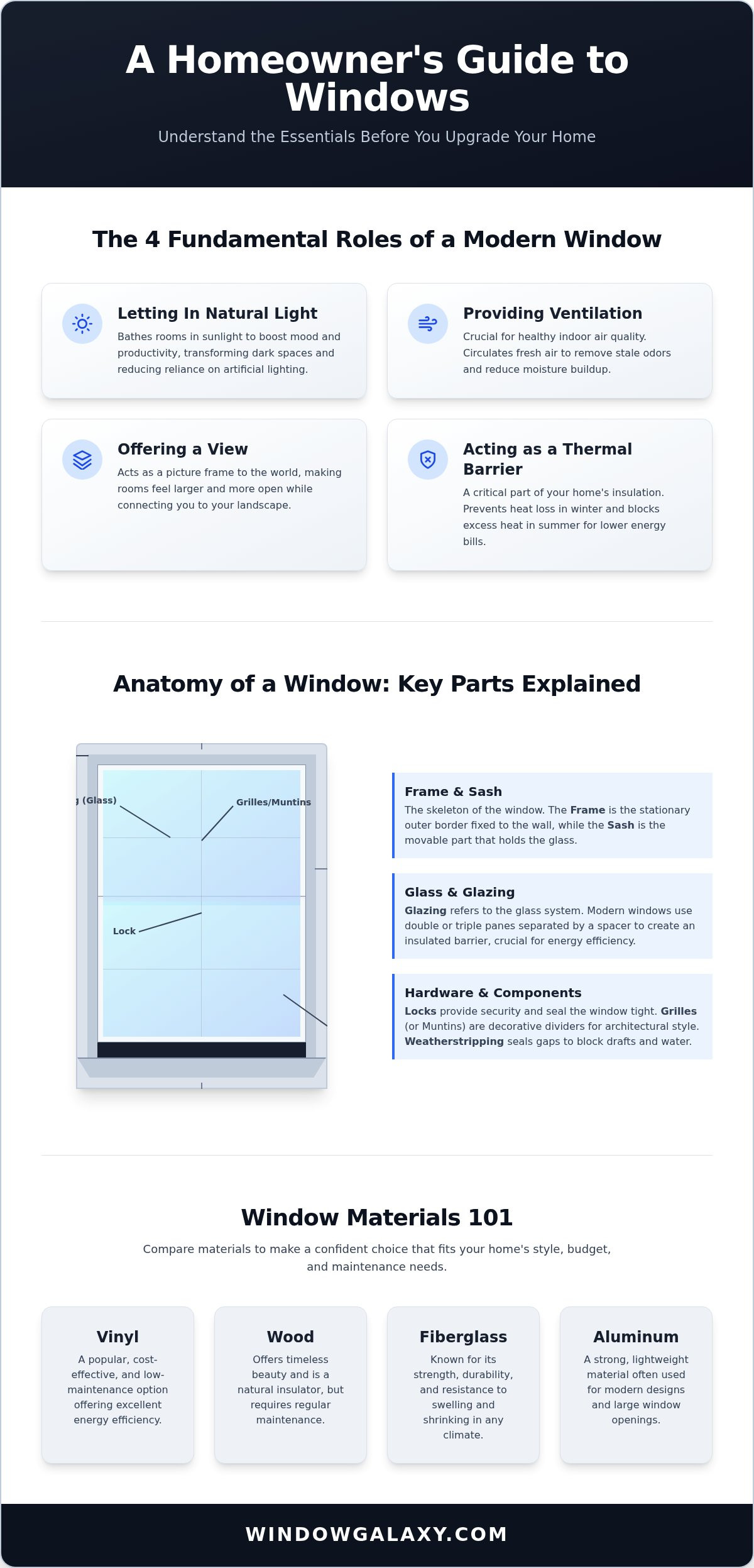
Many homeowners think of a window as just a piece of glass in a wall, but in reality, it’s one of the most hardworking components of your home. While a basic definition of What is a window? might describe it as an opening for light, its true purpose is far more complex and vital. Understanding these fundamental roles is the first step toward choosing a quality product that enhances your home’s comfort, beauty, and energy efficiency. A modern, professionally installed window must expertly balance four key jobs.
Letting in Natural Light
A high-quality window bathes your rooms in natural sunlight, creating a warm and inviting atmosphere. This connection to the outdoors is proven to boost mood and productivity while reducing your reliance on artificial lighting and lowering electricity costs. The right design can transform a dark, enclosed space into a bright, welcoming part of your home, making every day feel a little sunnier.
Providing Ventilation and Airflow
Proper ventilation is essential for maintaining healthy indoor air quality. Windows provide a crucial source of fresh air, helping to circulate out stale air, remove lingering odors from cooking, and reduce moisture that can lead to mold. Different styles, from easy-to-open casement windows to versatile double-hung units, offer unique airflow patterns, giving you precise control over your home’s environment.
Offering a View and Visual Connection
Your windows act as picture frames for the world outside, connecting you to your landscape and neighborhood. A clear, expansive view can make any room feel larger, more open, and less confined. The style and placement of your windows are key to maximizing this visual connection, turning a simple wall into a beautiful, dynamic focal point that adds character and value to your property.
Acting as a Thermal Barrier
Perhaps the most critical role in terms of cost and comfort is acting as a thermal barrier. Your windows are a key part of your home’s insulation. Quality, energy-efficient windows prevent precious heat from escaping in the winter and block unwanted solar heat during the summer. This powerful function directly leads to lower energy bills and a more comfortable, consistent temperature in your home year-round.
Anatomy of a Window: Understanding the Key Parts
When discussing a replacement or repair project, the terminology can feel overwhelming. We believe a well-informed customer is an empowered one. Understanding the basic components not only helps you speak confidently with contractors but also allows you to compare products effectively. Every part, from the frame to the smallest seal, plays a critical role in performance, durability, and energy efficiency. Let’s break down the key parts of a modern window unit.
Frame and Sash: The Foundation
Think of the frame and sash as the skeleton of the unit. These two parts provide the structural integrity and are typically made from materials like vinyl, wood, or fiberglass.
- Frame: This is the stationary, outermost border that is installed directly into your wall. It is comprised of the head (top piece), jambs (side pieces), and sill (bottom piece).
- Sash: This is the part that holds the glass and moves (in an operable unit). For example, in a double-hung style, two sashes slide up and down independently.
Glass and Glazing: The Clear Barrier
The glass is your view to the world, but its construction is more technical than you might think. “Glazing” is the professional term for the glass system within a sash. Today’s high-quality units rarely use just a single pane. Instead, they feature double- or even triple-pane glazing. These multiple layers of glass are separated by a component called a spacer, which helps insulate the unit. This multi-layered construction is a cornerstone of high-performance, energy-efficient windows, as it significantly reduces heat transfer and helps lower your utility bills.
Hardware and Other Components
The smaller parts are just as crucial for function, security, and longevity. These components work together to ensure smooth operation and a tight seal against the elements.
- Locks and Latches: These secure your home and pull the sashes together tightly, compressing the weatherstripping to prevent air leaks.
- Grilles or Muntins: These are decorative strips that divide the glass into smaller-looking panes to add architectural style.
- Weatherstripping: This durable material creates a seal around the sash, blocking drafts and preventing water from seeping in. Quality weatherstripping is essential for a truly weatherproof installation.
A Homeowner’s Introduction to Common Window Styles
The style of a window defines more than just its appearance; it dictates how it opens, how much air it lets in, and how it frames your view. Choosing the right style is a crucial decision that depends on the room’s function and your home’s architectural design. Understanding the most common window styles is the first step toward making a professional, informed decision. This overview will help you identify the windows you currently have and discover the ideal options for a future replacement project.
Windows That Slide: Hung and Gliding Windows
These classic windows operate on a track, making them a reliable and space-saving choice for almost any room. They are known for their traditional look and straightforward functionality.
- Double-Hung: Features two vertically sliding sashes (panels). You can open both the top and bottom for versatile and efficient air circulation.
- Single-Hung: Only the bottom sash slides up, while the top sash remains fixed. This is a simple, time-tested, and cost-effective design.
- Gliding/Sliding: Sashes move horizontally from side to side. They are perfect for areas where you don’t have space for a window to swing outward, such as over a deck or walkway.
Windows That Swing Out: Casement, Awning, and Hopper
Operated with a hand crank, these windows are hinged on one side and create an unobstructed view when open. They are highly energy-efficient, as the sash presses tightly against the frame when closed, creating a strong seal.
- Casement: Hinged on the side, a casement window swings outward to the left or right, effectively catching breezes to ventilate your home.
- Awning: Hinged at the top, this style pushes out from the bottom. This design allows you to enjoy fresh air even during a light rain.
- Hopper: The inverse of an awning, a hopper window is hinged at the bottom and swings inward from the top. It’s a secure choice often used in basements.
Stationary Windows: Picture and Specialty Shapes
When ventilation isn’t a priority but natural light and a stunning view are, stationary windows are the perfect solution. These fixed windows do not open but offer maximum energy efficiency and an uninterrupted line of sight.
- Picture Windows: Large, fixed panes of glass designed to frame your landscape like a beautiful piece of art.
- Specialty Shapes: Custom shapes like arches, circles, octagons, and triangles add unique architectural character and visual interest to your home.
Our team is here to help you find the perfect match for your home’s needs and aesthetic. Explore our full gallery of window styles to see the quality and variety we offer.
Window Materials 101: Vinyl, Wood, Fiberglass, and Aluminum
The frame of your window is more than just a border for the glass-it’s the foundation of its performance and style. The material you choose directly impacts everything from the initial cost and long-term durability to maintenance requirements and your home’s energy efficiency. Making an informed decision is key to your satisfaction, as your local climate and budget are critical factors. Let’s compare the most common options to help you find the perfect fit for your home.
Vinyl Windows: The Popular Choice
Vinyl is the leading choice for homeowners because it delivers an exceptional blend of affordability, quality, and low maintenance. These frames never need painting and are built to resist moisture and humidity. While custom color options can be more limited than wood, their outstanding thermal performance and overall value make them an ideal solution for most homes.
Wood Windows: The Classic Beauty
For timeless elegance and a traditional aesthetic, nothing compares to wood. It’s a natural insulator and can be painted or stained to perfectly match your home’s interior and exterior decor. However, this premium look requires regular maintenance-sanding and refinishing-to protect it from rot and insects, and it represents a higher initial investment.
Fiberglass and Composite Windows
Engineered for superior performance, fiberglass and composite frames are built to last. They are extremely durable, low-maintenance, and resist swelling, shrinking, or warping in even the most extreme weather. This makes them an excellent all-around performer for any climate. While the price point is higher than vinyl, their longevity and stability provide incredible long-term value and peace of mind.
Aluminum Windows
Known for their strength and sleek, modern look, aluminum frames are lightweight yet robust. Their slim profile maximizes your glass area and view, making them a favorite in contemporary architectural styles. The primary drawback is that metal is a poor insulator, making these frames less energy-efficient unless they feature a thermal break. They are best suited for temperate climates or commercial applications.
To improve their thermal performance, especially in business settings, many property owners explore Commercial window tinting as an effective upgrade.
Navigating these choices is the first step toward a successful project. If you have questions about the best material for your home, our professional team is here to help you make a confident decision.
Beyond the Basics: How Modern Windows Improve Your Home
Gone are the days when a window was just a pane of glass in a frame. Today’s high-performance windows are engineered with advanced technology designed to make your home more comfortable, quiet, and energy-efficient. Understanding these features not only helps you make a smarter investment but also empowers you to read product labels, like those from the NFRC (National Fenestration Rating Council), with confidence. Investing in better technology isn’t an expense; it’s a direct path to long-term savings on your energy bills.
Energy-Efficient Glass Coatings (Low-E)
One of the most significant advancements is Low-E, or low-emissivity, glass. This involves an invisible, microscopic metallic coating applied to the glass surface. Its job is simple but powerful: it reflects heat back to its source. In the winter, it keeps your home’s warmth inside, and in the summer, it reflects the sun’s heat away. This technology also blocks damaging UV rays, protecting your furniture, floors, and artwork from fading over time.
Double and Triple-Pane Glazing
Modern windows dramatically improve insulation by using two or three panes of glass, a technique known as double or triple-pane glazing. The space between the panes creates a sealed air gap that acts as a thermal barrier. For even greater performance, this gap is often filled with a dense, inert gas like Argon or Krypton, which is a far better insulator than air. The result is a substantial reduction in heat transfer and a noticeably quieter home.
Understanding Energy Performance Ratings
When you shop for a new window, you’ll encounter a few key performance ratings. At Window Galaxy USA, we believe in clear communication, so here are the two most important ones to know:
- U-Factor: This measures how well a window prevents heat from escaping your home. The lower the U-Factor, the better the window is at insulating.
- Solar Heat Gain Coefficient (SHGC): This measures how well a window blocks heat from the sun. The lower the SHGC, the less solar heat it transmits, keeping your home cooler in the summer.
For a trusted benchmark of quality and efficiency, always look for products that are ENERGY STAR® certified. These products are guaranteed to meet strict energy performance standards set by the EPA.
Not sure what you need for your home’s specific climate and orientation? Our team is here to provide professional guidance and find the perfect solution for you. Schedule a free consultation today.
Your Home’s Future Looks Bright Through the Right Windows
As we’ve explored, a modern window is a vital, multi-faceted component of your home, influencing everything from natural light and energy bills to your property’s overall style and security. Understanding the different parts, materials, and styles empowers you to make an informed decision that will enhance your living space for years to come.
Making that decision shouldn’t be a stressful experience. At Window Galaxy, we believe in a partnership built on trust and clear communication. Our professional, punctual, and respectful installation teams handle every project with precision, while a dedicated project manager ensures constant communication from start to finish. We keep our promises, ensuring your complete peace of mind.
Proudly serving homeowners in NJ, NY, PA, CT, and DE, we’re ready to help you find the perfect solution. Ready to upgrade your view? Schedule your free, no-obligation estimate today. Let’s bring more light, beauty, and value into your home, together.
Frequently Asked Questions
What is the difference between a replacement window and a new construction window?
A replacement window is custom-sized to fit perfectly within an existing window frame. This method is less invasive, making it ideal for upgrading your home’s windows without disturbing the surrounding wall or trim. In contrast, a new construction window includes a frame with a nailing fin. It is installed directly onto the house’s sheathing, making it suitable for new homes or major renovations where the wall studs are exposed and the entire old unit is being removed.
How long should a good quality window last?
You can expect a high-quality, professionally installed window to last between 15 and 25 years. The ultimate lifespan is influenced by factors like the frame material-vinyl and fiberglass offer exceptional durability-your local climate, and consistent maintenance. Proper installation is just as critical as the product itself, as it ensures a weathertight seal and smooth operation for years to come. We believe in doing the job with precision and care to maximize your investment.
What is an egress window and where is it required?
An egress window is a window specifically designed to be large enough for a person to exit through during an emergency, such as a fire. Local building codes require them in all sleeping rooms and in finished basements to ensure a safe escape route. These windows must meet strict size requirements for clear opening, height, and width, and they must be operable from the inside without needing special tools or keys, providing critical peace of mind for your family.
Can I replace just the glass in my window instead of the whole unit?
Yes, replacing only the glass is often possible, especially if the window frame itself is still in excellent condition. This is a common solution for cracked panes or for double-pane windows where the seal has failed, causing fogginess. However, if the frame is warped, rotted, or allows drafts, a complete window replacement is the superior long-term solution. A full replacement addresses all potential issues at once, ensuring maximum energy efficiency and performance.
What are the first signs that I might need new windows?
The earliest signs include windows that are difficult to open and close, noticeable drafts or cold spots near the frame, and condensation or fog between the glass panes. You may also see visible damage like cracked or rotting sills and frames. Another key indicator is a sudden increase in your energy bills, which often signals that your windows are no longer providing adequate insulation and are losing costly heated or cooled air from your home.
How much does a new window typically cost?
The cost for a new window, including professional installation, typically ranges from $400 to over $1,500. The final price is determined by several factors, including the window’s size, material (vinyl, wood, or fiberglass), and style (such as double-hung, casement, or bay). Features like energy-efficient glass coatings and custom grid patterns also affect the cost. For an honest, accurate price tailored to your project, we recommend scheduling a free, no-obligation estimate with our team.
