


Have you ever sat by a closed window during a New Jersey winter and felt a chill that your thermostat just can’t fix? That draft isn’t just a nuisance; it’s a sign that you need to understand what is a U-factor for windows. Most homeowners feel overwhelmed by technical labels and conflicting ratings found on new products. It’s frustrating to worry about high energy bills when you just want a cozy, reliable home for your family.
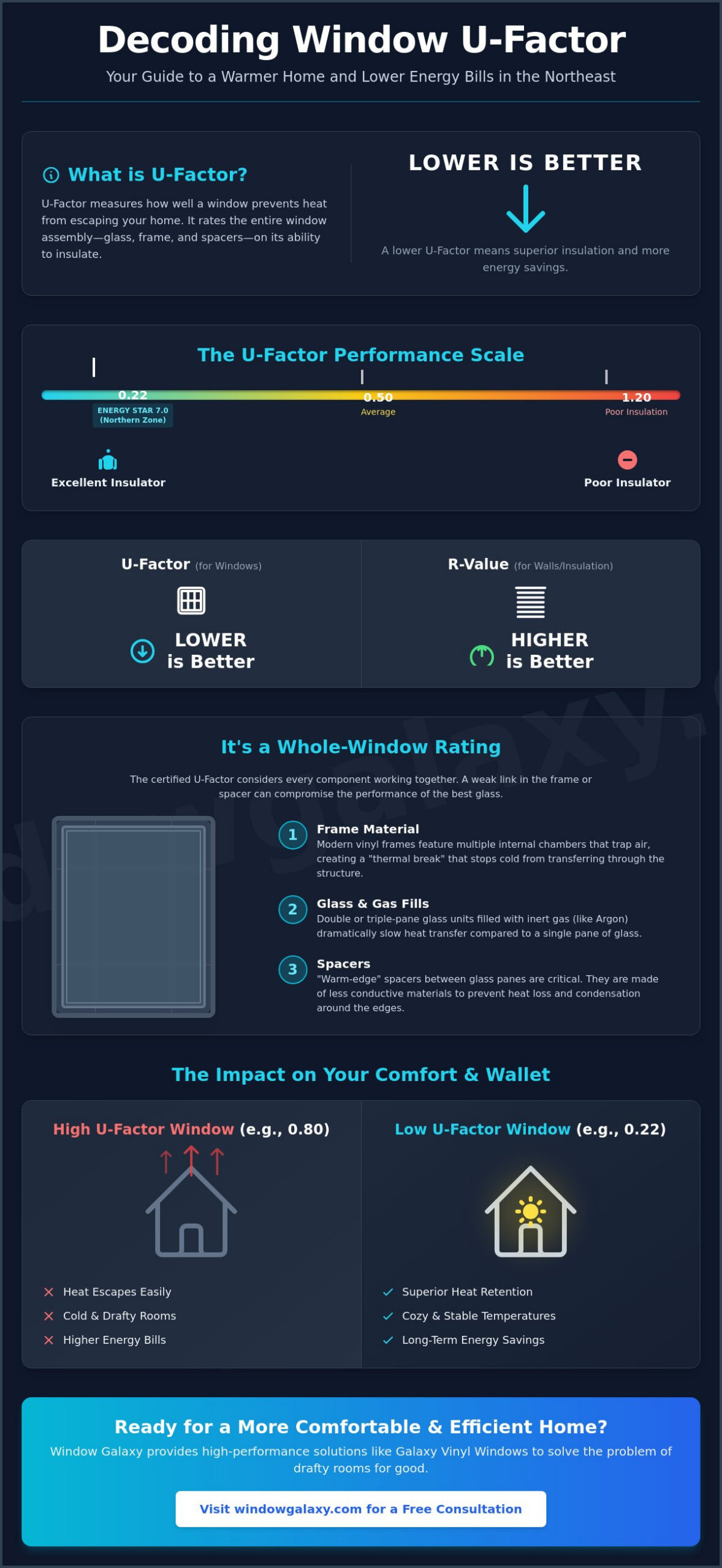
At Window Galaxy USA, we’re here to partner with you to make sense of these numbers. We promise to show you exactly how U-factor ratings impact your energy savings and year-round comfort. You’ll learn why our local climate requires specific standards, such as the ENERGY STAR 7.0 requirement of 0.22 or less for northern zones. This guide breaks down the U-factor scale, explains how to select the right Galaxy Vinyl Windows or Andersen products, and gives you the tools to read any window label with total confidence.
Key Takeaways
- Understand exactly what is a U-factor for windows and why a lower number is the key to keeping your home warm during harsh Northeast winters.
- Learn why this rating applies to the entire window unit, ensuring your frames and spacers work together to prevent heat from escaping.
- Identify the ideal U-factor range for New Jersey climates to maximize your comfort and long-term energy savings.
- Discover how to locate and interpret the NFRC label to verify that your new windows meet the latest ENERGY STAR requirements.
- See how Window Galaxy provides high-performance solutions like Galaxy Vinyl Windows to solve the problem of drafty rooms for good.
Understanding U-Factor: The Key to Your Home’s Thermal Performance
When you start researching new windows, the technical jargon can feel like a barrier to making a good decision. At Window Galaxy USA, we believe you deserve clear answers. To put it simply, the U-factor is the rate at which a window, door, or skylight conducts non-solar heat flow. It’s a specific measure of Thermal transmittance through the entire window assembly. When you’re asking what is a U-factor for windows, you’re looking for a grade on how well that window prevents your indoor heat from leaking outside.
The scale for this rating generally falls between 0.20 and 1.20. Unlike many other home ratings, a lower number is actually better. A window with a low U-factor is a superior insulator. This is vital because windows are typically the “weakest link” in your home’s insulation. While your walls are packed with thick materials to keep you warm, a window is a thinner barrier. Choosing a high-performance option like Galaxy Vinyl Windows from Window Galaxy USA ensures that this “hole” in your home’s protection is as strong as possible. Our team focuses on these details to help you maintain a more stable and comfortable living environment.
A low U-factor also changes how your home feels to the touch. It directly impacts the temperature of the interior glass surface. Understanding what is a U-factor for windows helps you see why some rooms feel colder than others despite having the heat on. If you’ve ever walked past a window in January and felt a “ghostly” chill, it’s often because the glass itself is freezing. A better U-factor keeps that glass warmer; this stops your body heat from radiating away from you toward the cold pane. This level of comfort is exactly what we strive to provide for every client we serve.
Heat Loss vs. Heat Gain: Why the U-Factor Matters
It’s easy to confuse different energy ratings, but U-factor has a very specific job. It measures how well a window keeps heat inside during the winter months. This is different from solar heat gain, which measures how much heat from the sun enters your home. In the Northeast, we focus heavily on the U-factor because we spend so much of the year trying to keep our homes warm. When a window has a poor rating, you’ll notice those classic “drafty” feelings that make you want to turn up the thermostat even when the heat is already running. We help you select products that solve this problem effectively.
U-Factor vs. R-Value: What’s the Difference?
If you’ve ever looked at attic insulation, you’ve heard of R-value. This measures thermal resistance, or how much a material pushes back against heat. U-factor is essentially the mathematical inverse of R-value. While R-value is used for solid objects like walls, U-factor is the standard for windows. You can use a simple rule of thumb: for R-value, higher is better; for U-factor, lower is better. We work with you at Window Galaxy USA to ensure your new windows provide the perfect balance to complement your home’s existing insulation and overall efficiency.
How U-Factor Ratings Are Calculated and Measured
Many homeowners assume the glass does all the heavy lifting for energy efficiency. While the glass is important, it is only one piece of the puzzle. When people ask what is a U-factor for windows, they are often surprised to learn that the rating accounts for the entire assembly. This includes the frame, the glass panes, and the spacers that hold everything together. If any one of these components is poor, the entire rating suffers. At Window Galaxy USA, we look at the whole picture to ensure your home’s thermal envelope is secure.
The National Fenestration Rating Council (NFRC) acts as the industry standard-setter for these measurements. They don’t just take a manufacturer’s word for it. Instead, they use standardized laboratory testing to ensure every product is evaluated under the same conditions. This rigorous process creates a level playing field. It allows you to make an apples-to-apples comparison between different window models without any guesswork. Our team relies on these verified numbers to help you choose the best fit for your specific home layout.
Beyond the Glass: The Role of Frames and Spacers
The frame material plays a massive role in your home’s thermal performance. Older materials often acted as a bridge, allowing cold air to travel right through the window unit. Modern vinyl frames, such as those used in our Galaxy Vinyl Windows, provide a superior thermal break. These frames are designed with multiple chambers that trap air and prevent heat from moving through the structure. It’s a meticulous design that prioritizes your comfort and peace of mind.
Inside the window, spacers play a critical role that often goes unnoticed. These small components keep the glass panes at the perfect distance from one another. If the panes are too close or too far apart, the insulation fails. High-performance windows often include gas fills between the panes. Using Argon or Krypton gas provides a denser barrier than plain air; this significantly reduces the rate of heat transfer. When you schedule a consultation with our experts at Window Galaxy USA, we can explain which gas fill is most effective for your home’s orientation.
The Importance of NFRC Certification
You should only invest in windows that carry an official NFRC label. This label is a promise of reliability and provides the final answer to what is a U-factor for windows for that specific product. The testing process simulates extreme temperatures to verify that the window will perform in the real world. We offer a range of NFRC-certified products, including Andersen Windows, to ensure our clients receive the highest quality. This certification gives you the confidence that your windows will meet or exceed the performance levels required for our region.
Why Low U-Factor Windows Are Essential for Northeast Climates
New Jersey and the surrounding states are defined as “heating-dominated” climates. This means for roughly eight months of the year, your primary energy goal is keeping heat inside your living space. When you’re investigating what is a U-factor for windows, it’s vital to recognize that a lower number is your best defense against the biting coastal winds and freezing temperatures typical of our region. In the Northern Climate Zone, the ENERGY STAR 7.0 standard now requires a U-factor of 0.22 or less to ensure maximum efficiency. High-performance windows act like a thermal blanket, protecting your family from the harsh outdoor elements.
Some homeowners believe that a powerful furnace can simply overpower the effects of inefficient windows. While a good heating system is important, relying on it to compensate for drafty glass is a losing battle. Low U-factor windows significantly reduce the constant strain on your HVAC system. When your home holds heat effectively, your furnace doesn’t have to cycle on and off as frequently to maintain your desired temperature. This reduction in “short-cycling” leads to a longer equipment lifespan and helps you avoid the stress of unexpected mechanical failures during a cold snap.
Tackling New Jersey Winters and Humid Summers
In the middle of January, a low U-factor prevents those uncomfortable “cold spots” that often force families to stay away from certain rooms. However, the benefits of understanding what is a U-factor for windows extend well into the warmer months. During our humid July afternoons, that same high-quality insulation helps keep your expensive air-conditioned air inside where it belongs. By creating a more stable thermal envelope, you enjoy a more comfortable home regardless of the season. You can explore more about these regional needs in our Ultimate Guide to Window Replacement.
Balancing U-Factor with Solar Heat Gain
While the U-factor is a critical number, it works in close synergy with the Solar Heat Gain Coefficient (SHGC). In the Northeast, we often recommend prioritizing the lowest possible U-factors for north-facing windows because these windows never receive direct sunlight to help warm the glass surface. Our custom windows allow for room-by-room optimization. This meticulous approach means we can specify different ratings for different sides of your house. We ensure your north-facing rooms stay warm while your south-facing rooms don’t overheat, creating a balanced and energy-efficient environment throughout your entire home.
How to Read a Window Energy Label Like a Pro
Reading a window label shouldn’t feel like deciphering a secret code. When you look at a new window, you’ll see a black-and-white sticker provided by the National Fenestration Rating Council (NFRC). This is essentially the “Nutrition Facts” for your home’s energy performance. To find the specific answer to what is a U-factor for windows on a product, look at the top-left corner of the label. This is the first and most important number for homeowners in our region.
For the Northeast, the ideal range typically sits between 0.25 and 0.30. However, current ENERGY STAR 7.0 requirements for Northern climates are even stricter, calling for a U-factor of 0.22 or less. While 0.30 used to be a common baseline, lower is always better for your daily comfort. We encourage you to start a two-way dialogue with our team about these specific ratings. We want you to feel confident that the windows you choose are the right fit for your home’s orientation and your family’s needs.
Identifying the NFRC Label
You should never buy house windows that lack an official NFRC sticker. This label is your only guarantee that the window has undergone rigorous, independent testing. It provides a standardized way to compare performance without relying on marketing claims. If a product doesn’t have this certification, there’s no way to verify its actual insulation value. Our team prioritizes these certified standards to give you complete peace of mind during your project.
Selecting the Right Number for Your Room
Different house windows styles can have slightly different U-factors due to their construction. A large picture window might have a different rating than a small bathroom hopper. Consistency across your entire home is the key to whole-house efficiency. We help you look at each room individually to ensure the overall thermal envelope is balanced. This meticulous oversight ensures that no single room remains a “cold spot” in your home. Understanding what is a U-factor for windows helps you see why a high-performance frame is just as important as the glass itself.
If you’re ready to see these high-performance ratings in action, contact Window Galaxy for a free consultation today.
Maximizing Energy Efficiency with Window Galaxy
Choosing the right products is a major step toward a more comfortable home, but it’s only half the battle. At Window Galaxy, we provide high-performance solutions like our Galaxy Vinyl Windows, which are specifically engineered to meet the strict thermal demands of the Northeast. When you ask what is a U-factor for windows, you’re looking for a promise of long-term performance. We fulfill that promise through meticulous project management and a commitment to accuracy that starts the moment we measure your openings. Our team takes the stress out of home improvement by handling every technical detail with professional oversight.
Our product line features advanced glazing and frame technology designed to surpass standard requirements. We don’t believe in a one-size-fits-all approach. Instead, we act as your partner to ensure the specifications of your new windows align with the unique needs of your New Jersey home. Whether you’re selecting Andersen Windows or our signature vinyl line, you’re investing in materials that have been vetted for their durability and functional excellence. We prioritize your peace of mind by delivering results that you can feel in every room of your house.
Precision Engineering for Superior Insulation
The Galaxy Vinyl Windows we install are built with multi-chambered frames. These chambers act as individual pockets of air that significantly slow down the transfer of heat. This precision engineering is what allows our windows to achieve the low U-factors necessary for our climate. We carefully select glass packages that feature specialized coatings and gas fills to ensure your home remains a sanctuary against the elements. Our focus on detail during the manufacturing process means that every unit is optimized for maximum thermal resistance. We take pride in the accuracy of our work, knowing that these small details lead to big savings on your energy bills.
Professional Installation: Protecting Your U-Factor
A window is only as good as its installation. Even the most expensive, high-rated window will fail if there are gaps or poor seals in the frame. This is a critical point that many homeowners overlook. If air can leak around the edges, the U-factor on the label becomes meaningless. Our Window Installation Services are designed to protect your investment. We focus on creating air-tight seals and using high-quality insulation to ensure the entire assembly performs exactly as intended. This level of craftsmanship is a core tenet of our reliability.
We invite you to experience our service-first approach. Our process is built on a two-way dialogue, where we listen to your concerns and provide honest, professional guidance. We’re large enough to offer industry-leading credentials but small enough to give your project the personalized attention it deserves. If you’re ready to eliminate drafts and lower your energy costs, contact Window Galaxy today to request a consultation. Let us show you how our dedicated management and quality workmanship can transform your home’s comfort.
Invest in a Warmer, More Efficient Future
Choosing the right windows for your home starts with a clear understanding of what is a U-factor for windows. This rating is the single most important number for homeowners in our region. A lower U-factor means your home stays warmer in the winter and cooler in the summer; it directly reduces the strain on your HVAC system. By focusing on high-performance frames and precision-engineered glass, you can turn your home into a sanctuary of comfort.
At Window Galaxy, we’re proud to serve families across NJ, PA, CT, NY, and DE with premium window solutions. We only offer certified NFRC and ENERGY STAR partner products that meet the highest industry standards. Our team brings meticulous project management and clear communication to every installation. We ensure your new windows perform exactly as promised for years to come. Don’t let drafty rooms and high energy bills cause unnecessary stress for your family.
Get Your Free Window Replacement Estimate Today and take the first step toward a more efficient home. We look forward to partnering with you on your next project and providing the peace of mind you deserve.
Frequently Asked Questions
What is a good U-factor for windows in New Jersey?
A good U-factor for windows in New Jersey is 0.22 or less. This rating aligns with the latest ENERGY STAR Version 7.0 standards for the Northern Climate Zone. Because our region experiences cold winters, prioritizing a low number ensures your home retains heat effectively. When you’re asking what is a U-factor for windows that will keep you comfortable, this range is the ideal target for high-performance vinyl windows.
Is U-factor or SHGC more important for my home?
In the Northeast, the U-factor is generally the more important number for year-round comfort. While the Solar Heat Gain Coefficient (SHGC) helps manage heat from the sun during summer, the U-factor determines how much heat stays inside during our long winters. A balanced approach is best, but protecting against heat loss is the primary goal for most local homeowners looking to improve their home’s thermal performance.
Does a lower U-factor mean the window is more expensive?
Lower U-factor ratings often reflect the use of advanced components like triple-pane glass or Argon gas fills. These features provide a higher level of insulation and long-term durability. While these windows represent a superior product, they offer a significant return through increased comfort and energy efficiency. We focus on providing the best value by matching the right technology to your specific home layout and needs.
How does U-factor affect condensation on my windows?
A lower U-factor helps prevent condensation by keeping the interior glass surface warmer. When the glass is cold, moisture in your indoor air hits it and turns into water droplets. Because high-performance windows insulate better, the temperature of the glass stays closer to your room temperature. This reduces the fogging effect and protects your window sills from moisture damage and potential mold growth over time.
Can I improve the U-factor of my existing windows without replacing them?
You cannot significantly change a window’s U-factor without a full replacement. Temporary fixes like plastic film or heavy curtains might reduce drafts, but they don’t change how the glass and frame conduct heat. A true improvement requires the advanced glazing and frame technology found in modern units. Replacing old windows is the only way to ensure a permanently lower U-factor and better thermal resistance.
Why do different window styles have different U-factor ratings?
Ratings vary because different styles have different construction methods and air-tightness levels. Fixed windows usually have lower U-factors because they don’t open and have very tight seals. Operable windows, like double-hung or sliders, have moving parts that require specialized weatherstripping. Each style interacts with the frame differently, which impacts the final thermal transmittance of the entire window unit and its ability to hold heat.
Does the window frame material affect the U-factor?
Yes, the frame material is a major factor in the final energy rating. Materials like vinyl are excellent insulators because they don’t conduct heat easily. Many modern vinyl frames also include multiple internal chambers to trap air and provide a thermal break. This design prevents the cold from traveling from the outside of the house to the inside, resulting in a much better U-factor for the homeowner.
How much can I save on my energy bills with a lower U-factor?
Homeowners can save between $100 and $600 per year on energy bills by switching to ENERGY STAR certified windows. These figures come from official energy reports and reflect the impact of reduced heat loss. By understanding what is a U-factor for windows and choosing a lower rating, you reduce the workload on your furnace. This leads to consistent monthly savings and a more stable indoor environment throughout the year.
