


Last Tuesday evening, Sarah sat in her favorite armchair near the living room window, only to feel a persistent, chilly breeze despite her thermostat being set to 72 degrees. She realized that even the most beautiful frames can’t do their job if the vinyl window weatherstripping has begun to compress or peel away after five years of exposure to the elements. It’s a common frustration that turns a cozy evening into a battle against the cold.
We agree that your home should be a sanctuary where you feel completely at ease. You shouldn’t have to worry about unpredictable utility bills or windows that are difficult to open because of degraded seals. At Window Galaxy, we prioritize your peace of mind and believe in providing the clarity you need to keep your home efficient. We Keep Our Promises by ensuring you have the right information to protect your investment and maintain a comfortable environment.
This guide will teach you exactly how to identify worn seals, maintain your current setup, and evaluate if your windows are still providing the protection your family deserves. We’ll provide a 4 point checklist for evaluating your current windows so you can decide with confidence if they are still performing at their best.
Key Takeaways
- Understand how weatherstripping acts as a vital seal between your window sash and frame to block drafts, moisture, and outside noise.
- Identify the specific materials required for effective vinyl window weatherstripping to ensure your home remains energy-efficient throughout the seasons.
- Learn how to perform simple DIY inspections, such as the “light test” and “dollar bill test,” to catch failing seals before they impact your comfort.
- Discover professional maintenance tips to extend the life of your seals and why professional-grade quality exceeds temporary “peel-and-stick” fixes.
- Explore how Window Galaxy ensures long-term performance and peace of mind through our meticulous installation and “We Keep Our Promises” philosophy.
What is Vinyl Window Weatherstripping and Why Does It Matter?
Every window has a hidden hero that maintains your home’s internal climate. What is weatherstripping? It is the specialized material used to seal the gaps between your window sash and the frame. For a Window Galaxy installation, this seal acts as a primary barrier against the outside elements. It stops air from leaking in, keeps rain from seeping through, and blocks out the noise of a busy neighborhood.
Your home’s thermal envelope is the physical separator between the conditioned interior and the unpredictable exterior environment. High-quality vinyl window weatherstripping is a critical component of this envelope. When these seals are tight, they improve the overall R-value of your home. This means your walls and windows work together to keep heat where it belongs. Our team ensures every seal is placed with precision because we know that even a tiny gap can compromise your entire insulation system.
The Anatomy of a High-Performance Seal
Modern windows from Window Galaxy don’t just sit loosely in a frame. They use a compression seal that activates when you lock the window, pressing the sash firmly against the weatherstripping. This creates multi-point contact along the entire perimeter to ensure no air bypasses the barrier. The air infiltration rate is the specific measurement of how many cubic feet of air pass through a square foot of window area per minute under 25 mph wind pressure. Our precision-engineered seals keep this number exceptionally low to ensure your home stays quiet and still.
Impact on Energy Efficiency and Comfort
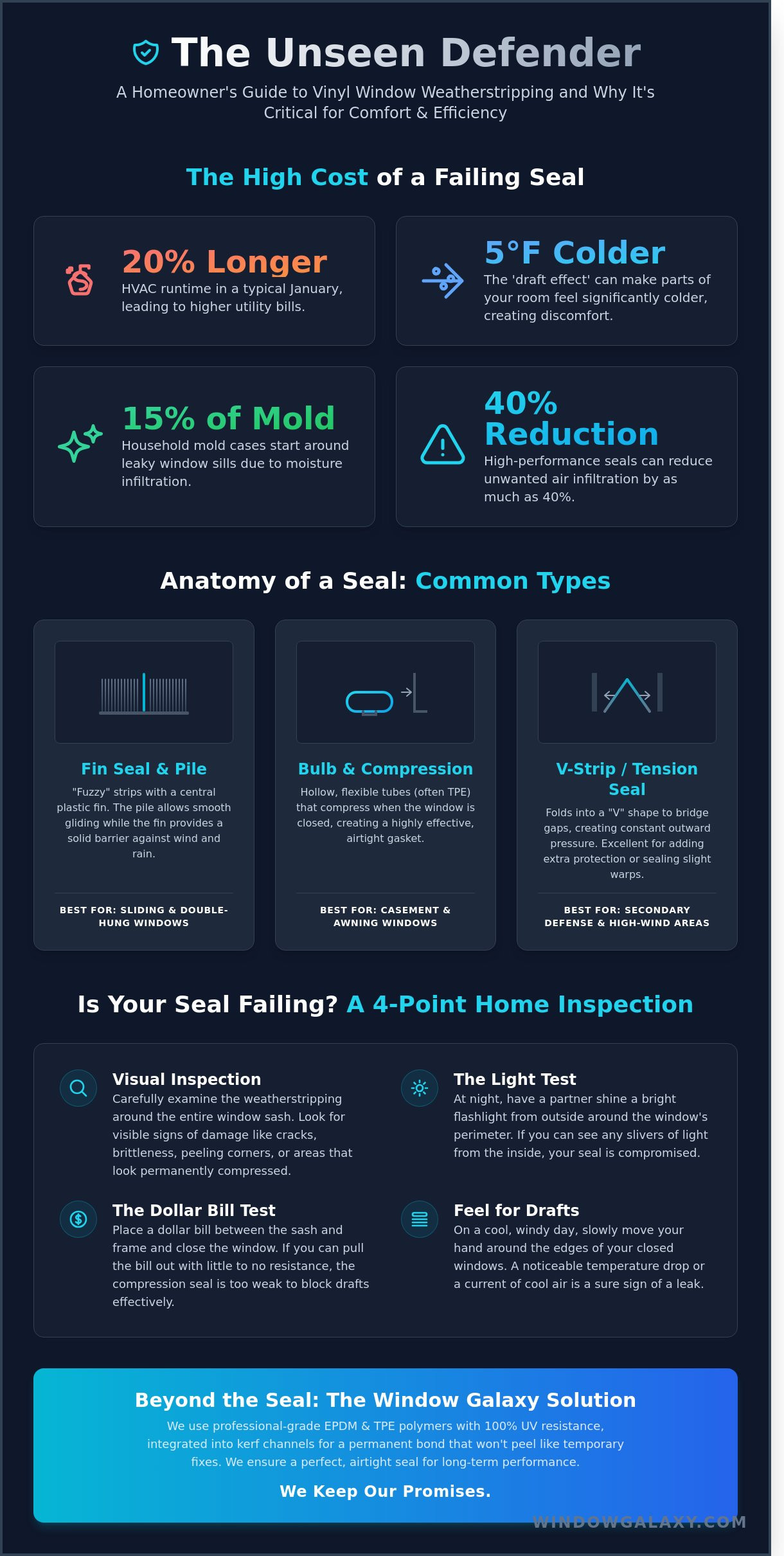
Faulty or worn-out seals cause your HVAC system to run 20% longer during a typical New Jersey January. This leads to the “draft effect,” where one side of your living room feels 5 degrees colder than the other, creating localized discomfort. Proper vinyl window weatherstripping also protects your interior finishes from damage. By blocking moisture, we prevent the 15% of household mold growth cases that often start around leaky window sills. We keep our promises by providing seals that stand up to the most demanding seasonal shifts.
Common Types of Weatherstripping Used in Vinyl Windows
Choosing the right materials for vinyl window weatherstripping ensures your home remains comfortable throughout the year. Vinyl frames have unique expansion and contraction rates, moving up to 1/16 of an inch depending on temperature shifts. Because of this movement, the stripping must be flexible yet durable. Window Galaxy utilizes high-grade synthetic polymers like EPDM and TPE. These materials offer 100% UV resistance, preventing the seals from becoming brittle or cracking after years of direct sun exposure.
Standard wood or aluminum windows often use adhesive-backed felt, but vinyl units require specialized profiles that slide into integrated channels called kerfs. This design creates a permanent bond that won’t peel away over time. High-performance seals provide measurable energy-saving benefits by reducing air infiltration by as much as 40% in some residential units. We focus on these precise details because a tight seal is the foundation of a draft-free home.
Fin Seal and Pile Weatherstripping
You’ll usually find “fuzzy” pile stripping on sliding windows and double-hung units. It consists of thousands of synthetic filaments that allow the sash to glide smoothly without sticking. A central plastic “fin” sits inside the pile to act as a solid barrier against wind and rain. Our team ensures these seals are seated perfectly to stop drafts while maintaining easy operation. They’re the best choice for parts of the window that must slide against each other.
Bulb and Compression Seals
Bulb seals look like hollow tubes and are the standard for casement and awning windows. When you close the window, the sash squeezes the bulb against the frame to create an airtight gasket. We prefer TPE materials for these seals because they have excellent “memory.” This means the seal returns to its original shape even after being compressed for 24 hours a day during a long winter. This resilience keeps the seal effective for its entire lifespan.
V-Strip and Tension Seals
V-strips, or tension seals, fold into a “V” shape to bridge gaps between the sash and the frame. They create constant outward pressure, which is helpful if a unit has developed a slight 2-millimeter warp over years of use. While often used as a secondary defense in high-performance windows, they add an extra layer of protection in high-wind areas. If you’re noticing a slight breeze near your frames, a professional window inspection can identify which specific seal profile will best restore your home’s efficiency.
Troubleshooting: Signs Your Weatherstripping Has Failed
Window Galaxy recommends performing a visual inspection of all window seals every 12 months. Regular maintenance ensures your home remains energy efficient and comfortable throughout the changing seasons. Two simple DIY tests can confirm if your seals are still performing. The “light test” involves having someone shine a flashlight around the exterior window frame at night while you check for light leaks from the inside. Alternatively, the “dollar bill test” is highly effective. Close your window on a dollar bill; if you can pull the bill out with no resistance, the seal is no longer airtight. When vinyl window weatherstripping fails, it often leads to secondary issues like sash misalignment, which puts unnecessary strain on the window’s hardware.
Visible Damage and Material Degradation
Inspect your seals for “flattening,” a condition where the material loses its “memory” and no longer springs back to fill gaps. In New Jersey, where temperatures fluctuate from 10°F in winter to 95°F in summer, materials can become brittle, cracked, or start peeling away from the frame. Over a 5-year period, accumulated dirt and debris act as an abrasive, wearing down the seal every time you operate the sash. If the material feels hard to the touch rather than pliable, it’s time for a replacement.
Performance Red Flags: Drafts and Noise
Drafts are a clear indicator that your vinyl window weatherstripping is compromised. You can detect micro-drafts by running a damp hand or a smoke pen along the window perimeter on a windy day. A sudden 15% increase in outside noise levels often signals that the sound-dampening properties of your seals have vanished. During high-wind events, you might hear a distinct “whistling” or “howling” sound. This occurs when air is forced through tiny gaps at high velocity. For a deeper look at seal types, the U.S. Department of Energy guide to weatherstripping offers technical insights into how different materials block airflow.
Condensation and Moisture Issues
Moisture is a major red flag for seal integrity. It’s vital to differentiate between surface condensation and moisture trapped between double-paned glass. Failed perimeter seals allow warm, humid indoor air to reach the cold glass surface, creating puddles on your sill. This moisture can lead to drywall bubbling or wood rot within 18 to 24 months of the initial leak. If you see consistent moisture or if your windows are difficult to lock, it’s helpful to consult our guide on Signs You Need New Windows to determine if a repair or a full upgrade is the best path forward for your home’s protection.
Maintenance and Professional Replacement Guidelines
Proper care ensures your vinyl window weatherstripping performs at peak efficiency for 15 years or longer. Regular upkeep prevents the material from becoming brittle or losing its compression seal. We recommend a simple maintenance routine performed twice a year, typically during spring and fall cleaning, to protect your investment. We keep our promises by providing you with the knowledge to maintain a draft-free home long after installation is complete.
Cleaning and Lubrication Best Practices
Cleanliness is the first line of defense against drafts. Dust and grit act like sandpaper on delicate seals. Follow these steps to keep everything moving smoothly:
- Use Mild Soap: Mix a few drops of dish soap with warm water. Avoid ammonia-based cleaners or bleach. These harsh chemicals can degrade vinyl and cause weatherstripping to crack within 24 months.
- Apply Silicone Lubricant: Use a 100% silicone-based spray on sliding tracks and bulb seals. This keeps the material flexible and prevents sticking. Avoid petroleum-based products because they attract dirt and can cause vinyl components to swell.
- Clear the Weep Holes: These small drainage gaps in the outer frame must stay clear. If debris blocks them, water can back up and damage the internal seals. Use a small wire or compressed air to ensure they remain open.
When DIY Repairs Fall Short
Many homeowners turn to peel-and-stick foam tapes as a quick fix. These generic solutions often create more problems than they solve. A foam strip that’s just 1/16 of an inch too thick can put 25% more stress on the window sash, which eventually warps the frame. These tapes frequently interfere with the window’s locking mechanism. This compromises both your home security and the airtight seal. Most generic weatherstripping does not match the original engineering specifications of a high-quality vinyl window.
Precision is vital for energy efficiency. Professional-grade windows feature integrated weatherstripping that is heat-welded or T-slotted into the frame during manufacturing. Replacing these components requires specialized tools and an expert eye to avoid damaging the vinyl profile. Before you attempt a repair, it’s wise to inspect the various parts of a window to confirm the frame and sash remain structurally sound. If the frame is warped, new vinyl window weatherstripping won’t stop the drafts.
Window Galaxy is here to help you achieve a stress-free home renovation experience. Our team provides the precision and care needed to keep your home comfortable year-round. If your seals are failing, don’t settle for a temporary patch. Schedule a professional estimate with our experts to restore your home’s energy efficiency.
Beyond the Seal: The Window Galaxy Solution
Sometimes DIY fixes for vinyl window weatherstripping aren’t enough to handle a drafty house. You need a permanent solution that stops energy loss before it starts. At Window Galaxy, we provide a comprehensive approach to home comfort that goes beyond simple repairs. We Keep Our Promises. This means we don’t just sell a product; we deliver a high-performance window system installed with precision and care. Our professional installers ensure every seal aligns perfectly from the very first day.
- Professional alignment for long-term durability
- Premium seals designed to resist peeling and cracking
- Energy-efficient designs that help manage utility costs
Engineering for the Mid-Atlantic Climate
New Jersey weather is tough on homes. Humidity levels often hit 80% in the summer, while January temperatures frequently drop below 20 degrees. Our windows feature multi-chambered vinyl extrusions. These chambers work with our premium seals to trap air and prevent heat transfer. We perform a 100% quality control check on every single installation. This rigorous process confirms your vinyl window weatherstripping is seated correctly to handle the 40-degree temperature swings common in our region.
A Stress-Free Experience from Start to Finish
You deserve a home improvement project that doesn’t cause headaches. We assign a dedicated project manager to your home to oversee every detail. We practice nonstop communication throughout the replacement process. This starts with listening. We want to hear about your specific draft concerns so we can address them with the right solution. Our team stays hands-on from the initial estimate to the final walkthrough.
You can stop worrying about temporary repairs or messy adhesive tapes. We help homeowners move toward a beautiful upgrade that lasts for decades. Our customers often tell us the experience exceeded their expectations because we prioritize their peace of mind. It’s time to transition from frustrating drafts to a permanent, beautiful upgrade that keeps your family comfortable in every season.
Take Control of Your Home’s Comfort and Energy Savings
Maintaining your vinyl window weatherstripping isn’t just about stopping a breeze. It’s about protecting your structure from moisture and keeping your energy bills manageable. You’ve learned how to spot the brittle seals and when it’s time to bring in the experts for a permanent fix.
At Window Galaxy, we handle every detail so you don’t have to worry. Our teams are fully licensed in NJ, NY, PA, CT, and DE, bringing professional expertise to every neighborhood we serve. You’ll work with 1 dedicated project manager who provides nonstop communication from the first day to the final walkthrough. We’re known for being punctual and respectful because we believe your peace of mind is just as important as a tight seal. We Keep Our Promises, ensuring your installation is handled with the precision that has defined our service for years.
Stop letting the outside air dictate your indoor comfort. Schedule Your Free Estimate with Window Galaxy Today and experience the difference of a truly professional installation. We’re ready to help you create the draft-free home you deserve.
Frequently Asked Questions
Can I replace the weatherstripping on my vinyl windows myself?
You can certainly replace the weatherstripping on your own using basic household tools like a putty knife and a pair of heavy-duty scissors. Most homeowners find they can complete a single window in about 40 minutes. It’s a manageable task that yields immediate results for your home’s comfort levels. Window Galaxy professionals often see homeowners take pride in this simple maintenance step to keep their living spaces draft-free.
How often should vinyl window weatherstripping be replaced?
You should plan to replace your weatherstripping every 7 to 10 years to maintain peak energy efficiency. High-traffic windows that you open daily might show signs of wear after just 5 years. If you notice a 15 percent increase in your heating bills, it’s time to inspect the seals. Window Galaxy keeps our promises by helping you understand these timelines so your home stays protected year-round.
Why is my window still drafty after I replaced the weatherstripping?
Drafts often persist if the window sash is misaligned or if the new material is the wrong thickness for the gap. A tiny opening of just 2 millimeters is enough to let in a noticeable stream of cold air. Sometimes the window frame itself has shifted since its original installation in 2012. Window Galaxy project managers look at the entire opening to ensure every part of the window works together perfectly.
What is the best type of weatherstripping for double-hung vinyl windows?
Fin seal or brush pile is the most effective choice for double-hung units because it allows the sashes to slide without catching. A 0.25 inch pile height usually provides the most reliable seal against wind and fine dust particles. This specific vinyl window weatherstripping is engineered to survive thousands of opening cycles. Window Galaxy uses these high-quality materials to ensure your windows remain easy to operate while blocking out the elements.
Will new weatherstripping help reduce outside noise in my home?
New weatherstripping can reduce external noise levels by 4 decibels by sealing the air gaps that carry sound waves into your rooms. While it won’t block all sound like specialized acoustic glass, it creates a much quieter indoor environment. Many homeowners report a 20 percent improvement in tranquility after replacing worn seals. Window Galaxy focuses on your peace of mind by helping you turn your home into a quiet sanctuary.
Does failing weatherstripping mean I need to buy entirely new windows?
Failing weatherstripping does not mean you need a full window replacement. These seals are designed to be replaceable parts that wear out long before the sturdy vinyl frames, which often last 25 years. Replacing the seal is a cost-effective way to restore performance without a major renovation. Window Galaxy provides honest assessments to ensure you only invest in the services your home actually needs.
Can I use silicone caulk instead of weatherstripping to stop a draft?
You should never use silicone caulk on the moving parts of a window because it will permanently seal the sash shut. Caulk is intended for fixed joints where the frame meets your home’s siding, not for the tracks. Using vinyl window weatherstripping allows you to enjoy fresh air while maintaining a tight seal when the window is closed. Window Galaxy emphasizes quality control so your windows function exactly as they were designed to.
What should I do if my weatherstripping is peeling off the frame?
You should clean the vinyl frame with 90 percent isopropyl alcohol to remove old adhesive before attempting to re-attach the strip. Adhesives bond most effectively when the surface temperature is at least 65 degrees Fahrenheit. If the material has lost its original shape, replacing the entire length is the most professional way to fix the problem. Window Galaxy project managers suggest a full replacement of the peeling section to ensure your home remains energy efficient.
