


Did you know that upgrading to triple-pane windows can reduce your home’s heat loss by up to 40% compared to standard double-pane options? When the temperature drops, your windows shouldn’t feel like a block of ice. If you’ve spent the last few winters dealing with drafty rooms, frost on the glass, or a furnace that never seems to rest, you aren’t alone. We understand how frustrating it is to feel a chill in your own living room; we believe your home should be a reliable sanctuary from the elements.
This guide explores the essential debate of triple pane vs double pane windows for cold weather to help you make an informed choice for your family’s comfort. You’ll discover how the latest 2026 energy standards impact your home and why choosing high-performance solutions like Galaxy Vinyl Windows or Andersen Windows can transform your indoor environment. We’ll break down the differences in R-values and thermal efficiency to ensure you find the perfect fit for a warmer, quieter, and more efficient home this winter.
Key Takeaways
- Learn how adding a third layer of glass and insulating gas creates a superior thermal barrier that keeps the winter chill outside where it belongs.
- Discover the role of Low-E coatings in reflecting heat back into your living space, helping your furnace run less frequently during peak winter months.
- Compare the performance of triple pane vs double pane windows for cold weather to see which option effectively eliminates drafty “cold zones” in your home.
- Identify how to use home orientation and window placement to select the right insulation level for every room in your house.
- Understand why precision installation and heavy-duty vinyl frames are essential for maintaining the long-term airtight seal of high-performance windows.
The Cold Truth: Why Window Panes Matter for Winter Comfort
Your windows are the thin line between your cozy living room and the freezing winter air. Understanding the science of triple pane vs double pane windows for cold weather is the first step toward lasting comfort. The primary goal during any winter home improvement project is reducing heat transfer, which professionals measure using the U-factor. A lower U-factor means your windows are more efficient at keeping warmth trapped inside your home where it belongs. When you choose the right glass package, you’re doing more than just lowering a bill; you’re investing in the daily well-being of your family.
Thermal comfort isn’t just about the air temperature in the room. It’s also about the temperature of the glass surface itself. When glass stays cold, it creates what experts call a “thermal draft.” This sensation occurs because the cold surface of the window absorbs the radiant heat from your body. You might feel a chill while sitting on your sofa even if your furnace is running. High-performance windows solve this problem by keeping the interior pane much closer to your home’s actual indoor temperature. This eliminates that “shiver factor” often felt near older, less efficient glass units.
What is a Double Pane Window?
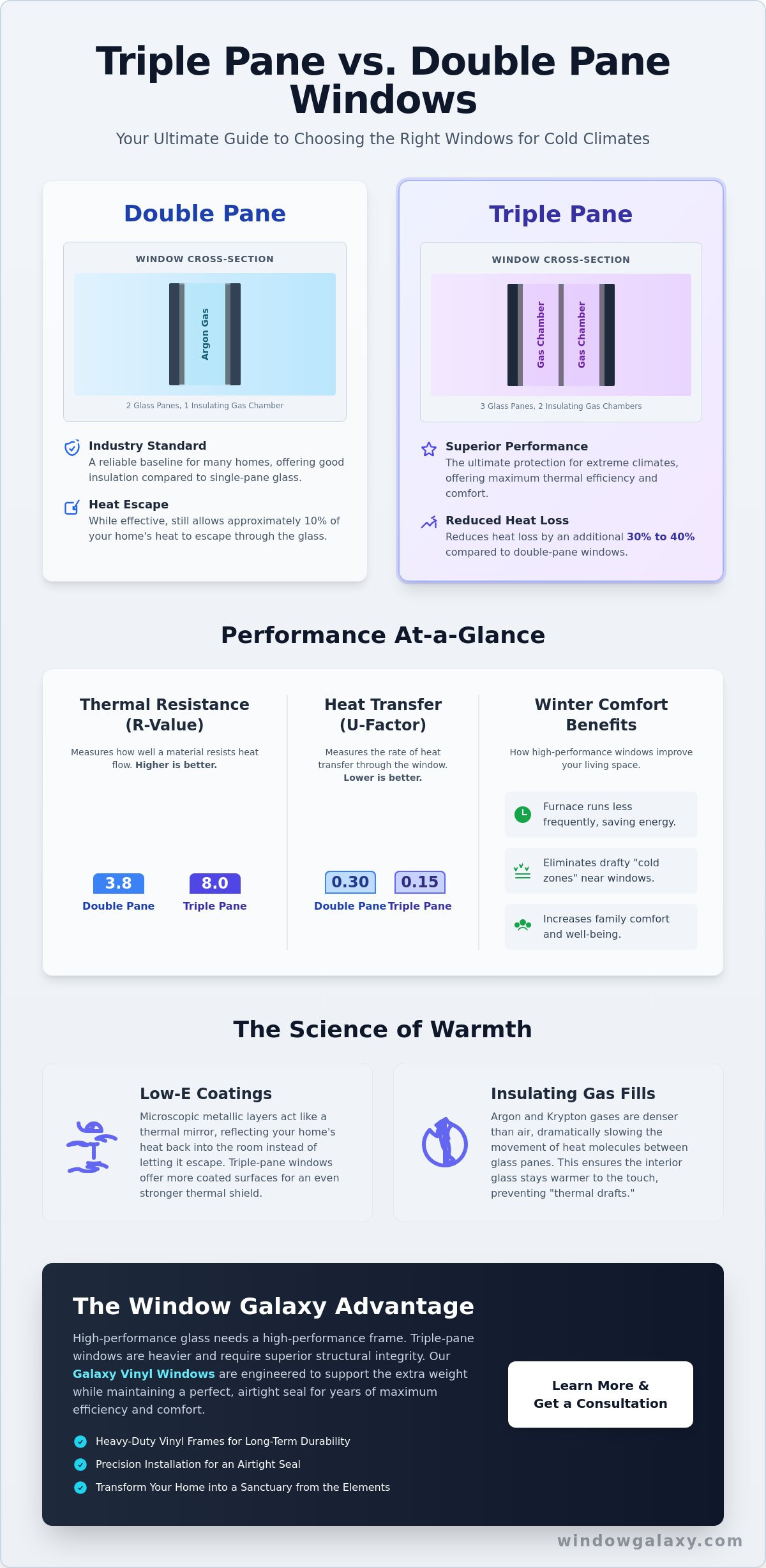
A double pane window features two layers of glass separated by a spacer to create a single sealed unit. This construction, often referred to as insulated glazing technology, replaced single-pane glass as the industry baseline decades ago. By trapping a layer of Argon gas between the panes, these windows provide a buffer that air alone cannot match. Argon is denser than oxygen; it slows down the molecular movement of heat, which prevents your expensive warmth from escaping into the night. It’s a reliable standard for many homes, but it still allows about 10% of your heat to escape through the glass.
What is a Triple Pane Window?
Triple pane windows take your home’s protection to the next level by adding a third layer of glass and a second insulating gas chamber. This extra barrier makes a massive difference in extreme climates. While a double-pane window offers decent insulation, a triple-pane unit can reduce heat loss by 30% to 40% more. This design significantly boosts the R-value, which measures how well a material resists heat flow. Double-pane windows usually sit between 3 and 3.8, but triple-pane units can reach an R-value of 7 or 8. Because of the added weight of the third glass layer, these units require the superior structural integrity of our Galaxy Vinyl Windows. We ensure your frames are engineered to support this extra glass while maintaining a perfect, airtight seal for years to come.
Understanding the Science: How Multi-Pane Windows Trap Heat
To understand why one window performs better than another, we have to look at the invisible technology inside the glass. The magic happens through a combination of microscopically thin metallic layers and specialized gas fills. Low-Emissivity (Low-E) coatings act like a thermal mirror. During a freezing winter night, these coatings reflect the heat from your furnace back into your rooms rather than letting it pass through the glass. When comparing triple pane vs double pane windows for cold weather, the number of these coated surfaces increases, providing an even stronger shield against the cold.
Gas fills like Argon or Krypton play a vital role too. While air is a decent insulator, these gases are much denser. They slow down the movement of heat molecules within the window unit. Krypton is often used in triple-pane setups because it performs exceptionally well in narrower spaces, creating a highly efficient thermal barrier. This technology contributes to the benefits of triple-glazed windows by ensuring the middle of the glass stays warm to the touch. If you’re interested in seeing how these technologies work in your specific home, our team is happy to discuss window installation services tailored to your needs.
Thermal Resistance (R-Value) vs. U-Factor
You’ll often hear two terms in the window industry: R-value and U-factor. It’s easy to get them confused. R-value measures how well a material resists heat flow. In this case, a higher number is better. However, windows are usually rated by their U-factor, which measures the rate of heat transfer. For winter performance, you want the lowest U-factor possible. While a standard double-pane window might have a U-factor around 0.30, a high-performance triple-pane unit can reach as low as 0.15 to 0.22. This small numerical difference represents a massive leap in your home’s ability to retain heat.
The Barrier Effect: Gas Fills and Coatings
The real advantage of a triple-pane system is the creation of two distinct “dead air” zones. These chambers stop convection currents from moving between the outside and inside panes. By having two separate gas-filled spaces, the cold has to fight through multiple layers of resistance. When paired with multiple Low-E surfaces, the interior glass temperature remains significantly higher. This barrier doesn’t just save energy; it eliminates the uncomfortable temperature drops that make rooms feel drafty even when the windows are shut tight.
We also pay close attention to the edges of the glass. Traditional aluminum spacers can conduct cold, leading to condensation or even frost inside your home. We use warm-edge spacers made of non-conductive materials. These spacers keep the edges of the glass warm, preventing moisture buildup and protecting your window frames from water damage. This meticulous attention to detail is why our installations provide such reliable performance during the harshest months of the year.
Triple Pane vs. Double Pane: Which Wins in Extreme Cold?
In our region, winter isn’t just a season; it’s a test of your home’s durability. While double-pane glass is a massive step up from older single-pane units, triple-pane technology is the clear winner when the thermometer drops below freezing. The most significant advantage lies in the sheer volume of heat retained. Triple-pane windows can reduce heat loss by 30% to 40% compared to modern double-pane units. Research regarding energy savings from triple-pane windows confirms that these units significantly decrease the energy flying out of your home. This translates to a furnace that doesn’t have to work overtime to maintain a steady temperature.
Beyond the numbers, there’s the “Cold Zone” effect to consider. Have you ever noticed that you can’t sit comfortably near a window in January? Even if the window is perfectly sealed, the cold glass surface creates a downward current of chilled air. This convection makes the room feel drafty. Because triple-pane windows use three layers of glass and two gas-filled chambers, the interior pane stays much warmer. You can sit right next to the glass with a book and feel perfectly cozy, even during a blizzard. It’s about reclaiming every square inch of your home’s living space.
Winter Performance and Heat Retention
The difference in surface temperature is striking. On a night when it’s 0°F outside, the interior glass of a standard double-pane window might feel like 45°F. In contrast, a high-performance triple-pane unit can keep that interior glass surface closer to 60°F. This 15-degree jump is what stops the “falling cold air” sensation. Your HVAC system cycles less frequently because the windows aren’t acting like giant ice blocks that constantly drain heat from the room. We see this result consistently with our Galaxy Vinyl Windows, which are designed to maximize this thermal barrier.
The Condensation Factor
Winter condensation is more than just a nuisance; it’s a threat to your home. When warm, humid indoor air hits a freezing glass surface, it reaches its dew point and turns into water. This moisture often pools on window sills, leading to mold growth and wood rot. Triple-pane windows stay warmer than the dew point, which keeps the glass clear and dry all season long. It’s a reliable way to protect your sills and maintain a healthier indoor environment.
Don’t forget the added benefit of sound dampening. That extra layer of glass and second gas chamber does more than trap heat; it creates a superior acoustic barrier. If you live near a busy street or a noisy neighborhood, the silence provided by triple-pane glass is an immediate relief. You get a quieter, warmer, and more protected home with a single upgrade. Our team takes great pride in the precision of our window installation services, ensuring that every unit is perfectly level and airtight to deliver these exact results.
Choosing the Right Insulation Level for Your Home
Deciding on the best glass package for your property requires a look at your home’s unique layout. Your local climate in the Northeast or Mid-Atlantic dictates how your home handles the winter. In these regions, a strategic approach to triple pane vs double pane windows for cold weather is essential. We often see homeowners who have one or two rooms that always feel colder than the rest of the house. This usually happens because those rooms face north or sit directly in the path of harsh winter winds. For these specific areas, the superior thermal barrier of a third pane is a practical solution for maintaining a steady temperature.
We believe windows should be viewed as part of a total home system. High-performance glass won’t reach its full potential if it’s installed in a wall with failing insulation. If you’re noticing drafts, it’s worth checking your siding and surrounding seals as well. A holistic approach to house windows and wall insulation ensures your investment delivers the comfort you expect. Our goal is to provide a comprehensive commitment to your peace of mind by evaluating every factor that impacts your indoor environment.
When is Double Pane Sufficient?
Standard double-pane units are an excellent choice for many replacement projects. They perform exceptionally well in south-facing rooms where you can take advantage of natural solar heat gain during the day. If your home is well-sheltered from the wind by neighboring houses or dense trees, a high-quality double-pane window provides reliable protection. These units meet the modern baseline for efficiency and are a significant upgrade for any home currently using older, drafty glass.
When to Upgrade to Triple Pane
The upgrade becomes a necessity if you have large picture windows or expansive glass walls. These large surfaces can act as heat sinks during a cold snap, pulling warmth out of your living space. Homes located near busy thoroughfares or noisy intersections also benefit from the extra layer of glass. The acoustic dampening provided by a triple-pane setup creates a noticeably quieter interior. If you plan on staying in your home for the long term, maximizing your energy efficiency now is a smart move for your future comfort.
The performance of any window depends entirely on the quality of the installation. A meticulous, airtight seal is the only way to maintain the thermal integrity of your new glass. Our team focuses on precision and clear communication throughout the entire process. We don’t just swap out units; we ensure the surrounding frame is prepared to support the extra weight and performance of your new windows. Ready to secure your home against the cold? Explore our professional window installation services to start your project with confidence.
The Window Galaxy Advantage: High-Performance Vinyl Windows
We believe that a successful home improvement project is built on a foundation of trust and meticulous planning. In the Tri-State area, where winter temperatures frequently swing from freezing rain to sub-zero winds, your choice of window matters. While the debate of triple pane vs double pane windows for cold weather often focuses on the glass, the frame and the installation team are just as critical. Our goal is to serve as your dependable partner, ensuring that your investment provides a lifetime of comfort and reliability.
Our custom windows are designed to meet the specific demands of our local climate. We don’t believe in one-size-fits-all solutions. Instead, we provide a comprehensive commitment to finding the exact glass package and frame configuration that suits your home’s orientation and exposure. Whether you choose our Galaxy Vinyl Windows or our high-performance Andersen Windows, you can rest assured that every unit is built to surpass standard requirements for thermal efficiency and durability.
Precision Engineering for Cold Weather
Triple-pane units offer incredible thermal resistance, often reaching R-values between 7 and 8, but they are significantly heavier than double-pane units. Our Galaxy Vinyl Windows feature a multi-chambered frame design specifically engineered to handle this extra weight without sagging or warping over time. This structure doesn’t just provide strength; it creates additional pockets of “dead air” that further insulate your home. We pair these robust frames with high-performance weatherstripping that remains flexible in extreme cold, maintaining a perfect seal even when the mercury hits its lowest point in January.
- Heavy-Duty Hardware: Our windows use reinforced hinges and locking mechanisms designed for the increased mass of triple-glazed units.
- Thermal Integrity: Multi-chambered vinyl frames prevent the frame itself from becoming a bridge for cold air.
- Airtight Seals: Precision-fit gaskets eliminate the micro-gaps where drafts typically begin.
The Window Galaxy Installation Process
A high-performance window is only as good as its fitment. Professional precision is the key to window replacement success. Our team prioritizes a two-way dialogue, keeping you informed at every stage of the project. We manage every detail, from the initial measurements to the final cleanup, with an emphasis on punctuality and respect for your home. This meticulous oversight ensures that every unit is perfectly level and plumb, which is essential for maintaining the long-term integrity of the gas seals between your panes.
We take pride in our service-first approach. By choosing a local expert who understands the unique pressure winter puts on homes in our region, you gain peace of mind. We don’t just sell windows; we provide a quieter, warmer, and more efficient indoor environment. Our commitment to quality workmanship means you can stop worrying about high energy bills and focus on enjoying a comfortable home with your family.
Secure Your Home’s Comfort for Winters to Come
Choosing between triple pane vs double pane windows for cold weather is a vital step in reclaiming your home’s warmth. You’ve learned how triple-pane technology creates a superior thermal barrier and why the right installation is the key to preventing winter condensation. Your comfort matters. We bring trusted local NJ expertise to every project, ensuring your new high-performance Galaxy Vinyl Windows are fitted with absolute accuracy. Our team is committed to A+ rated customer communication; you’ll always know exactly what to expect from start to finish. We believe in a partnership that lasts long after the project ends.
We’re ready to help you build a sanctuary that stands strong against the elements for years to come. Get Your Free Window Replacement Estimate from Window Galaxy Today and take the first step toward a warmer, quieter, and more efficient home. You deserve a living space where you can sit by the window in total comfort, no matter how low the temperature drops outside. We look forward to helping you transform your home into the cozy retreat you deserve.
Common Questions About Winter Window Upgrades
Are triple pane windows worth it for cold weather climates?
Yes, they are a strategic investment for any home facing sub-freezing winters. Triple-pane windows reduce heat loss by 30% to 40% compared to standard double-pane units. This superior insulation keeps your indoor temperatures stable and significantly reduces the runtime of your furnace. If you live in a region with harsh winters, the added comfort of sitting near a warm glass surface makes the upgrade a clear choice for long-term satisfaction.
Do triple pane windows reduce condensation in the winter?
They are highly effective at preventing the interior condensation that often plagues older windows. Because triple-pane units have two insulating gas chambers, the interior glass pane stays much warmer than the dew point of your indoor air. This prevents moisture from forming on the glass and pooling on your sills. By keeping your windows dry, you protect your home from the risks of mold growth and wood rot during humid winter months.
How much heavier are triple pane windows compared to double pane?
Triple-pane units are approximately 50% heavier than double-pane windows because of the additional layer of glass. This extra mass requires a high-performance frame designed for structural integrity. Our Galaxy Vinyl Windows are specifically engineered with multi-chambered frames to support this weight without sagging or warping. We ensure that your home’s structure and the window hardware are fully capable of maintaining a perfect, airtight seal for years to come.
Can I install triple pane windows in my existing window frames?
It’s usually necessary to perform a full window replacement rather than a simple glass swap. Triple-pane units are deeper and require specialized tracks and balances to operate smoothly under the increased weight. During our window installation services, we assess your current openings to ensure a precision fit. We focus on creating a comprehensive seal between the new frame and your home’s wall to maximize the thermal benefits of the multi-pane glass.
Do triple pane windows provide better soundproofing than double pane?
Yes, the extra glass layer and second gas-filled chamber create a significantly better acoustic barrier. When comparing triple pane vs double pane windows for cold weather, the sound reduction is often the most immediate benefit homeowners notice. The multiple layers of glass and air gaps break up sound waves from traffic or neighbors more effectively. This results in a quieter, more peaceful indoor environment that complements the improved thermal comfort.
What is the typical R-value difference between double and triple pane?
Standard double-pane windows typically offer an R-value between 3 and 3.8, but triple-pane units can reach an R-value of 7 or 8. This means triple-pane glass is nearly twice as effective at resisting heat flow. This jump in performance is vital for meeting the latest 2026 energy standards. By doubling your windows’ resistance to the cold, you create a much more reliable thermal envelope that keeps your expensive heat trapped inside your home.
Will triple pane windows make my home too dark?
The difference in light transmission is almost impossible for the human eye to detect in a residential setting. While adding a third pane technically reduces the Visible Transmittance (VT) rating slightly, modern high-performance glass is incredibly clear. You won’t feel like your rooms are darker or gloomier. Instead, you’ll simply notice that your living spaces feel more inviting because the temperature near the windows remains consistent with the rest of the house.
How long do the gas seals last in multi-pane windows?
Modern gas seals are designed to last 20 years or more when the windows are installed with precision. The Argon or Krypton gas fills are essential for the performance of triple pane vs double pane windows for cold weather. We prioritize a meticulous installation process to protect these seals from the stress of shifting or improper leveling. This dedication to quality workmanship ensures your windows maintain their high R-value and clarity for the life of the product.
