

The most rigid siding material on the market might actually be less effective at lowering your energy bills than its flexible, insulated counterpart. At Window Galaxy USA, we know that choosing between insulated vinyl siding vs fiber cement involves more than just picking a pretty color for your exterior. You want a home that stands strong against local weather extremes while keeping your family comfortable year round. It’s frustrating to watch your heating and cooling costs climb because of poor exterior insulation, and it’s equally stressful to worry about the high maintenance requirements of an aging home. You deserve a solution that provides lasting relief and genuine pride in your property.
This 2026 comparison guide will help you weigh the energy efficiency, durability, and aesthetic value of these two premium materials so you can make the best choice for your home. We’ll look at how a continuous thermal envelope can eliminate the heat loss common in older homes and compare that to the unmatched rigidity of Hardie plank siding. Our goal is to provide the clarity you need to achieve a low maintenance exterior that increases your property value for decades. We’ll break down the performance of each material to ensure your next home improvement project is a total success and provides the peace of mind you expect.
Key Takeaways
- Understand how the “blanket effect” of insulated vinyl can significantly reduce thermal bridging and help lower your home’s energy costs.
- Compare the durability of insulated vinyl siding vs fiber cement to see which material offers the best impact resistance against local weather extremes.
- Discover which premium option provides the most authentic wood look and superior fade resistance to maintain your curb appeal for decades.
- Learn why professional installation is the most important factor in protecting your manufacturer warranties and preventing moisture issues like mold or rot.
- Use our 2026 decision framework to choose the siding material that best aligns with your long-term goals for energy efficiency and property value.
Understanding the Basics: What are Insulated Vinyl and Fiber Cement?
Choosing the right exterior is a major decision for any homeowner in the Northeast. New Jersey weather brings everything from humid summers to freezing winters; your siding has to work hard to keep your family comfortable. We want to help you understand the core differences between insulated vinyl siding vs fiber cement so you can protect your home’s envelope effectively. Both materials are designed to shield your house from moisture and temperature shifts, but they achieve this goal through very different engineering methods. At Window Galaxy, we act as your expert guide to ensure you select the material that fits your long-term goals for comfort and protection.
The Anatomy of Insulated Vinyl Siding
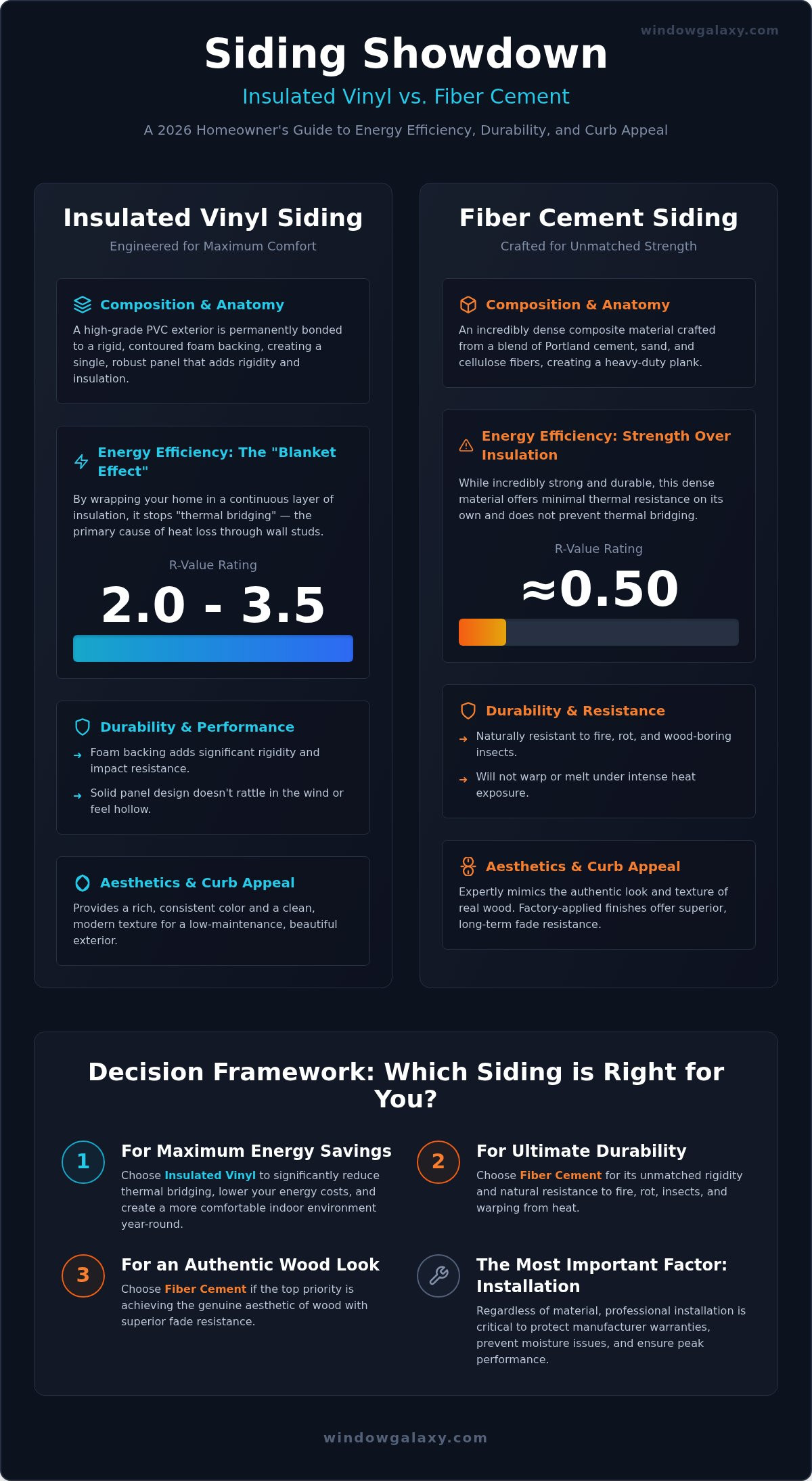
Insulated vinyl isn’t the standard plastic siding you might remember from decades ago. It features a high-grade PVC exterior that’s permanently bonded to a rigid foam backing. This foam is “contoured,” which means it’s molded to fill every bit of the hollow space behind the siding panel. This design serves several vital purposes for your home’s health. First, it adds significant rigidity to the vinyl; it doesn’t rattle in the wind or feel hollow when you touch it. Second, the integrated insulation acts like a thermal blanket. It wraps your home in a layer of protection that reduces heat loss through the wall studs. The PVC layer itself provides the rich color and texture you see from the curb, while the foam does the heavy lifting for your energy bills.
The Composition of Fiber Cement (Hardie Plank)
Window Galaxy provides professional installation of Hardie plank siding, which is a heavy-duty composite material. It’s crafted from a meticulous blend of Portland cement, sand, and cellulose fibers. This composition creates a siding product that’s incredibly dense and durable. Because it’s cement-based, it’s naturally resistant to common home headaches like rot, fire, and wood-boring insects. It won’t warp or melt under intense heat, making it a reliable choice for NJ homeowners who prioritize maximum durability. To ensure your home looks great for years, these panels often feature factory-applied finishes. These specialized coatings are designed for long-term color retention, even in high-UV environments. It’s a robust solution that mimics the authentic look of real wood without any of the maintenance stress that usually comes with it.
Energy Efficiency and Thermal Performance Comparison
When you evaluate insulated vinyl siding vs fiber cement, energy efficiency often sits at the top of the priority list. To understand how these materials perform, we first need to look at R-value. This is a technical measurement of a material’s resistance to heat flow. The higher the R-value, the better the material is at keeping your expensive treated air inside where it belongs. In the Northeast, where temperatures swing from humid 90s to single digits, this number becomes a critical factor in your monthly utility costs. We want you to feel confident that your investment is working for you every single day of the year.
Stopping Thermal Bridging in New Jersey Homes
Most homeowners assume that the pink or yellow insulation between their wall studs is doing all the work. However, those wooden studs actually act as “bridges” that allow heat to bypass your insulation and escape right through the walls. This is particularly problematic in older NJ homes where framing is less efficient. Insulated vinyl is specifically engineered to break this cycle. By bonding a layer of rigid foam to the back of the panel, it creates a continuous “blanket” over the studs. Thermal bridging is the primary cause of energy loss in siding-only projects. By choosing a material that stops this transfer, you’re addressing the root cause of drafty rooms and high cooling bills.
R-Value Ratings: Vinyl vs. Fiber Cement
The performance gap between these two materials is quite significant when you look at the raw data. Typical insulated vinyl siding offers R-values ranging from 2.0 to 3.5. In contrast, fiber cement is a dense, heavy material that generally provides an R-value of approximately 0.50. While fiber cement is incredibly strong, it doesn’t offer much in the way of thermal resistance on its own.
- Summer Impact: Insulated vinyl reflects solar heat, keeping your home cooler and reducing the strain on your air conditioning.
- Winter Impact: The thermal blanket effect prevents furnace-heated air from leaking through the wall studs into the cold outdoors.
These ratings only hold true when the product is handled with precision. Professional oversight ensures that every corner and seam is sealed correctly to maintain the integrity of the thermal envelope. Our team can help you evaluate how siding installation services improve your home’s overall thermal envelope. Proper alignment and attachment are essential to prevent gaps that would otherwise allow air to bypass your new insulation. We take pride in the meticulous details of every project to ensure your home reaches its full efficiency potential.
Durability, Maintenance, and Weather Resistance
Homeowners in New Jersey and surrounding states face a unique set of weather challenges. From coastal winds in Delaware to heavy snow in Pennsylvania, your siding is the first line of defense. When comparing insulated vinyl siding vs fiber cement, durability is about more than just thickness. It’s about how the material reacts to impact and moisture over decades. Fiber cement is exceptionally rigid, which makes it highly resistant to physical damage like stray baseballs or flying debris during a storm. Insulated vinyl, however, utilizes its foam backing as a shock absorber. This backing provides a solid foundation that prevents the vinyl from denting or cracking upon impact, a common issue with older, hollow-backed products.
Handling the Northeast Climate
The “Freeze-Thaw” cycle is a major concern in our region. Water that seeps into small cracks can freeze and expand, causing materials to degrade over time. Fiber cement is dense enough to resist this, though it requires meticulous moisture management during installation to prevent rot in humid climates. Vinyl is naturally impervious to moisture. Its inherent flexibility allows it to expand and contract as temperatures shift without losing its structural integrity. We always emphasize that a high-quality moisture barrier is essential regardless of which material you choose. This layer ensures that any wind-driven rain doesn’t reach your home’s wooden frame.
Maintenance Schedules and Long-Term Care
Maintenance is where these two paths diverge most sharply. Fiber cement provides a beautiful, permanent look but requires a commitment to long-term care. You’ll need to inspect the caulking periodically and plan for a fresh coat of paint every 10 to 15 years to maintain its appearance and water resistance. In contrast, insulated vinyl is virtually maintenance-free. A simple cleaning with soap and water once or twice a year is usually all it takes to keep it looking brand new. The color is baked through the material, so there’s no paint to chip or peel away over time.
At Window Galaxy, we ensure that a professional siding installation protects your home for decades. We focus on every detail, from the starter strips to the trim, ensuring your manufacturer warranties remain fully intact. Our team serves NJ, PA, CT, NY, and DE with localized expertise to help you avoid common regional pitfalls. Our goal is to provide a low-maintenance exterior that lets you enjoy your home instead of working on it. We believe in a collaborative process where we listen to your concerns and provide the most reliable solution for your specific property.
Curb Appeal: Aesthetics and Architectural Style
A home’s exterior is its first impression. While we’ve discussed performance and efficiency, the visual impact of your siding is what creates lasting pride in your property. When comparing insulated vinyl siding vs fiber cement, you aren’t just choosing a material; you’re choosing a design language. Modern manufacturing has transformed both options into high-end aesthetic solutions that can drastically increase your home’s curb appeal and market value. The right choice can make a small cottage look expansive or give a modern structure a warm, organic feel.
Your neighborhood’s architectural history plays a major role in this decision. Whether you live in a classic NJ Colonial or a contemporary PA farmhouse, the profile you choose matters. You can select from traditional lap siding, rustic shingles, or bold vertical board-and-batten styles. Each profile interacts with light differently. Deep shadows and crisp lines can highlight the unique character of your home while masking minor structural imperfections. We work closely with you to ensure the final look respects your home’s heritage while providing a fresh, updated feel.
Achieving the Classic Wood Look
Hardie plank siding is widely celebrated for its deep wood-grain textures. These patterns are molded from real wood, allowing the material to cast natural shadows that are virtually indistinguishable from cedar. Modern insulated vinyl has also made incredible strides. It no longer has the “plastic” sheen of the past. Because the foam backing provides a rigid foundation, the panels lay flatter and straighter on your walls. This eliminates the wavy appearance often seen with cheaper, non-insulated alternatives. It provides a clean, premium finish that stays true to the look of hand-installed timber.
Color Retention and UV Protection
The way your home handles the sun is vital for long-term satisfaction. Fiber cement often features baked-on color technology. This process creates a finish that’s highly resistant to the intense UV rays we experience during the summer months. On the other hand, the color in insulated vinyl is integrated throughout the entire panel. If a stray branch scratches the surface, the color remains consistent rather than showing a different shade underneath. Coordinating your new siding with custom windows creates a cohesive, high-end look that ties the whole exterior together. You can explore our full range of siding and window options to find the perfect color palette for your renovation project.
The Decision Framework: Which Siding is Right for You?
Choosing between insulated vinyl siding vs fiber cement is a significant step toward protecting your home and family. Both materials represent premium investments that outperform standard builder-grade options, but the right choice depends on your specific lifestyle and long-term property goals. We believe your home improvement project should be a stress-free experience based on clear information and reliable partnership. Whether you prioritize the highest possible thermal protection or a specific architectural finish, our team is here to guide you through every detail of the selection process.
Your decision should factor in your home’s architectural style and the standards of your local neighborhood. A historic home in a preservation district might require the specific profile of fiber cement, while a modern suburban residence could benefit more from the advanced thermal envelope of insulated vinyl. We also encourage you to assess your commitment to future maintenance. Some homeowners enjoy the ability to refresh their home’s look with paint, while others prefer a “set it and forget it” solution that stays beautiful with minimal effort.
When to Choose Insulated Vinyl Siding
Insulated vinyl is the superior choice for homeowners who place energy efficiency at the top of their priority list. If your goal is to achieve the highest possible R-value and significantly reduce your monthly utility costs, this material provides the continuous insulation you need. It’s also the ideal solution for busy families who want a low-maintenance lifestyle. You won’t have to worry about scraping, priming, or painting. It’s a top choice for modernizing 20th-century suburban homes, providing a crisp, clean look that lasts for decades without the need for professional upkeep.
When to Choose Fiber Cement Siding
Fiber cement is the preferred option for historical restorations or high-end architectural designs where visual authenticity is paramount. It’s also the smartest choice for homes located in high-fire-risk areas or extreme coastal environments due to its non-combustible nature and incredible density. If you’re the type of homeowner who likes to change your exterior color palette every decade to keep up with shifting trends, fiber cement gives you that flexibility. It provides a heavy-duty, permanent feel that mirrors the structural integrity of traditional masonry.
Partnering with Window Galaxy for Your Exterior Renovation
At Window Galaxy, we pride ourselves on being more than just installers; we are your dedicated project managers. Our “Two-Way Dialogue” approach ensures that we listen to your concerns and keep you informed at every stage of the project. Many of our clients find that bundling their siding project with new house windows creates a total home transformation that maximizes both beauty and efficiency. We are committed to meticulous oversight and reliable timelines, ensuring your renovation is completed with the accuracy and respect your home deserves. We serve NJ, PA, CT, NY, and DE with a focus on quality workmanship that provides you with total peace of mind.
Transform Your Home’s Exterior with Confidence
You now have the facts needed to navigate the choice between insulated vinyl siding vs fiber cement. Whether you choose the superior thermal envelope of insulated vinyl or the architectural rigidity of Hardie plank, your home will benefit from increased protection and curb appeal. Window Galaxy is a trusted regional provider serving NJ, PA, NY, DE, and CT. We specialize in both materials and prioritize meticulous project management to ensure your renovation is a success. Our commitment to two-way dialogue means we are with you at every stage, from the first consultation to the final walkthrough.
You don’t have to face these big decisions alone. Our team is ready to provide the professional oversight and localized expertise your property deserves. We focus on reliability and quality workmanship to give you total peace of mind throughout the duration of your project. Schedule your free siding consultation with Window Galaxy today to start your journey toward a more energy-efficient and beautiful home. We look forward to helping you create a low-maintenance exterior that lasts for decades.
Frequently Asked Questions
Is insulated vinyl siding worth the extra investment compared to standard vinyl?
Vinyl insulated siding provides significant value over standard options because it includes a permanent, rigid foam backing. This layer increases the panel’s durability, preventing the rattling and warping often seen with hollow products. It also provides a continuous thermal barrier that standard vinyl lacks. For homeowners in the Northeast, this added protection helps maintain a consistent indoor temperature while making the exterior much more resistant to physical impact from debris or hail.
How long does fiber cement siding typically last in New Jersey?
Fiber cement siding is a long-term solution that can last 50 years or more when maintained properly. In the New Jersey climate, its resistance to moisture and rot is a major advantage. While the material itself is incredibly durable, you must keep up with periodic caulking and painting to ensure its longevity. This commitment to maintenance protects the core material from the harsh freeze-thaw cycles common in our region.
Can fiber cement siding be installed over existing siding?
At Window Galaxy, we don’t recommend installing fiber cement over your existing siding. This material is heavy and requires a flat, stable surface to ensure a secure attachment to your home’s frame. Proper installation involves removing the old material to inspect for underlying rot or water damage. Starting with a clean surface allows our team to install a high-quality moisture barrier, which is essential for protecting your home’s structural integrity.
Which material is better for soundproofing a home near a busy road?
Both premium materials offer better sound dampening than standard siding, but they work in different ways. When comparing insulated vinyl siding vs fiber cement for noise reduction, fiber cement uses its extreme density to block external sounds. Vinyl insulated siding relies on its thick foam backing to absorb vibrations before they enter your living space. If your home is near a busy NJ highway, either choice will provide a noticeable improvement.
Does insulated vinyl siding really lower my monthly utility bills?
Vinyl insulated siding is specifically engineered to reduce your heating and cooling costs by addressing thermal bridging. Because the foam backing covers the wooden studs of your home, it prevents heat from escaping during winter and entering during summer. This creates a more efficient thermal envelope that allows your HVAC system to run less frequently. Many homeowners find that this consistent protection leads to visible savings on their monthly utility statements year-round.
Is fiber cement siding fireproof?
Fiber cement is classified as a non-combustible material, which means it won’t ignite when exposed to direct flame. While no material can make a house completely fireproof, this siding provides a superior level of fire resistance compared to wood or standard vinyl. It’s an excellent choice for homeowners seeking maximum safety. Many insurance companies recognize this durability, though you should always check with your specific provider regarding any potential policy benefits.
How do I know if my current siding needs to be replaced or just repaired?
You should consider a full replacement if you notice widespread warping, rotting, or moisture bubbles under the surface of your current siding. Small cracks or loose panels can sometimes be repaired, but persistent issues often signal underlying damage to your home’s envelope. If your energy bills are rising despite a well-maintained HVAC system, your siding may no longer be providing adequate insulation. A professional assessment can help you determine the most reliable path forward.
What is the best way to clean my new siding without damaging the finish?
The safest way to clean your new exterior is with a soft cloth or soft-bristle brush and a solution of mild soap and water. Avoid using high-pressure power washers, as they can force water behind the panels and damage the moisture barrier. For vinyl insulated siding, a simple rinse once or twice a year is usually enough. For fiber cement, regular cleaning also allows you to inspect the caulking and finish for any needed maintenance.
