


Are you tired of watching your energy bills climb higher each month while your home still feels drafty and cold in the winter? Do you wish you could tune out the constant noise from traffic and neighbors to finally enjoy a more peaceful living space? If you’re nodding along, you are not alone. Many homeowners face these exact challenges, often stemming from old, inefficient windows that simply can’t keep up. The good news is there is a proven, high-quality solution that addresses these frustrations: the modern double glazed window.
Making a significant home improvement decision can feel stressful, but we believe in providing clear, professional guidance you can trust. This complete guide is designed to give you the confidence you need for your project. We’ll explain exactly how this technology works to create a more energy-efficient home, detail the incredible benefits for your family’s comfort and your monthly budget, and help you decide if this is the right investment to increase your home’s value and create the quiet, comfortable sanctuary you deserve.
What Exactly Is a Double Glazed Window?
At its core, a double glazed window is a window unit constructed with two panes of glass set within a single frame. The real magic, however, isn’t just the extra glass-it’s the sealed, insulated space created between them. Think of it like a high-quality insulated thermos. A thermos keeps your coffee hot by using a vacuum between its inner and outer walls to stop heat from escaping. Similarly, the gap in a double glazed window acts as a powerful thermal barrier, dramatically reducing the transfer of heat between your home and the outdoors. This simple yet effective design is the foundation of modern energy efficiency in windows, ensuring your home stays more comfortable year-round.
The Anatomy of a Modern Double Glazed Window
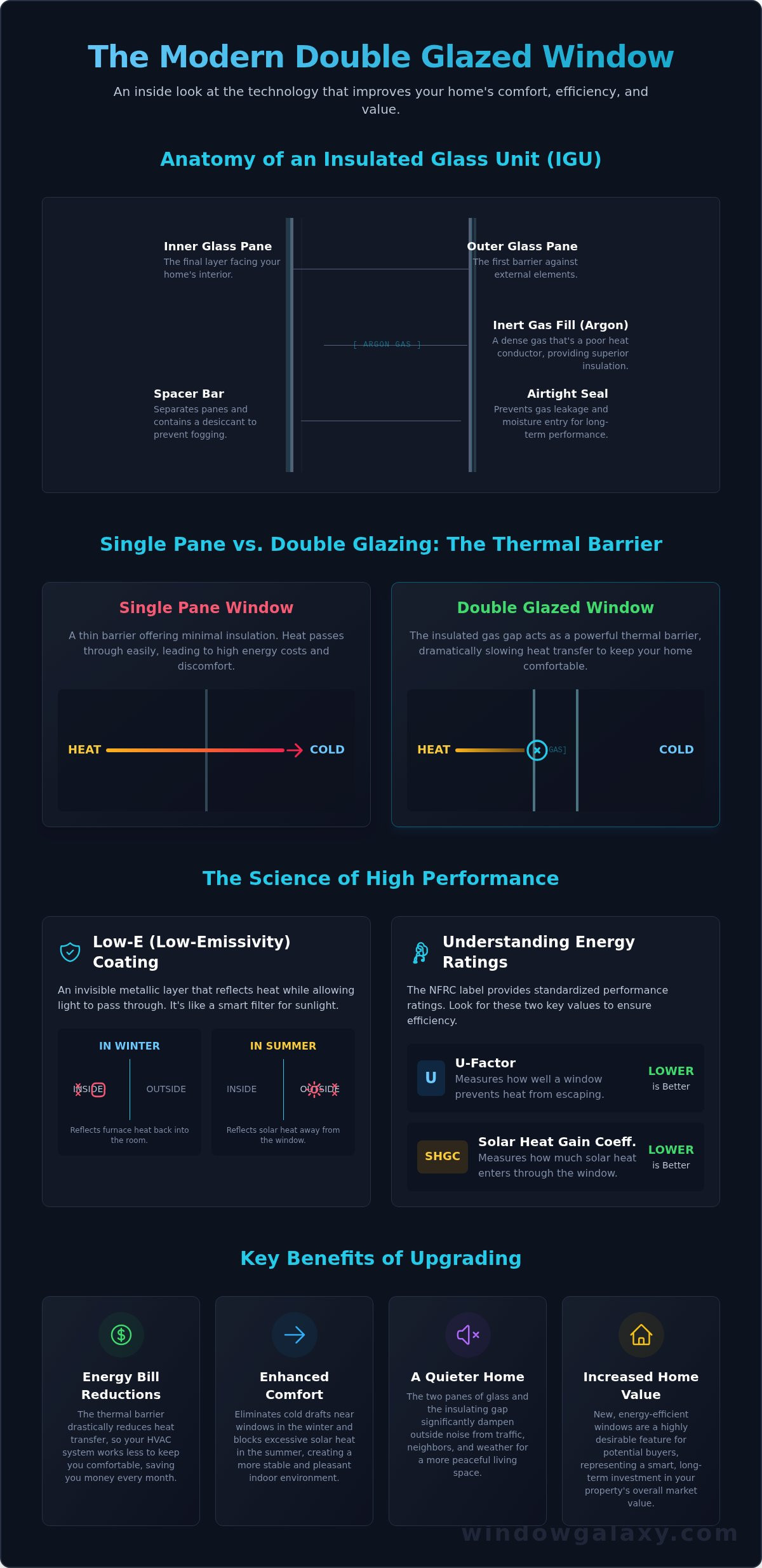
To deliver the quality and long-term performance homeowners deserve, every component of the window unit works together in a precisely engineered system. This entire assembly, technically known as Insulated glazing or an IGU (Insulated Glass Unit), is built for maximum efficiency. Understanding these parts helps you appreciate the value they bring to your home’s comfort and protection.
- Glass Panes: An inner and an outer pane of glass form the primary structure of the unit.
- Spacer Bar: This rigid component separates the two panes, creating a uniform gap. It also contains a desiccant (a special drying agent) to absorb any residual moisture trapped during manufacturing, which prevents fogging between the panes.
- Airtight Seal: A durable, flexible seal is applied around the entire perimeter of the unit. Its critical job is to prevent the insulating gas from leaking out and stop moisture from getting in.
- Inert Gas Fill: The space between the panes is filled with a dense, non-toxic gas, typically Argon. Because Argon is much denser than air, it is a poor conductor of heat, providing a significant boost in insulation.
Single Pane vs. Double Pane: More Than Just Glass
A traditional single-pane window is little more than a thin sheet of glass separating you from the elements. It offers minimal insulation, allowing your home’s expensive heated or cooled air to escape easily. This often results in uncomfortable drafts, higher energy bills, and condensation on the glass during colder months. Recognizing these major shortcomings, the industry moved toward double glazing as the standard for new homes and professional replacement projects. The superior insulation, noise reduction, and enhanced comfort it provides make it an essential investment for any homeowner seeking quality and lasting satisfaction.
The Science of Savings: How Double Glazing Actually Works
You know a double glazed window can lower your energy bills, but how does it accomplish this? The answer lies in smart, simple physics. Unlike a single pane of glass which offers little resistance to heat transfer, a double glazed window creates a sealed air gap between two panes. This gap acts as a powerful thermal barrier, dramatically slowing the movement of heat. In the winter, it keeps your valuable furnace heat inside where it belongs. During the summer, it prevents the sun’s intense heat from invading your home, keeping it cooler and more comfortable.
This simple principle is the foundation of modern window technology, ensuring your home remains a sanctuary of comfort year-round while providing significant energy savings.
The Insulating Power of the Gas Gap
While the gap itself is crucial, what fills it makes a professional-grade difference. Most high-quality windows use an inert gas, typically Argon, to fill the space between the panes. Argon is denser and less thermally conductive than regular air, meaning it’s much less effective at transferring heat. This slows down the convection process, providing superior insulation. For homeowners seeking the absolute highest performance, Krypton gas offers even better insulating properties, though it comes at a premium cost.
What is Low-E Coating and Why Do You Need It?
Low-E, or Low-Emissivity, coating is an invisible, microscopic layer of metallic oxide applied to the glass surface. Think of it as a smart filter for sunlight. It reflects long-wave infrared heat (the kind you feel) while allowing visible light to pass through. This delivers a dual benefit for total satisfaction:
- In Winter: It reflects your home’s radiant heat back into the room, preventing it from escaping.
- In Summer: It reflects the sun’s infrared heat away from the window, keeping your home from overheating.
Understanding Window Energy Ratings (U-Factor & SHGC)
To ensure you’re getting a quality product, it’s important to understand the ratings on the National Fenestration Rating Council (NFRC) label. These standardized measurements are part of a nationwide effort to improve the energy efficiency of windows and help you make an informed choice. The two most critical ratings are:
- U-Factor: This measures how well the window prevents heat from escaping. The lower the U-Factor, the better the window insulates.
- Solar Heat Gain Coefficient (SHGC): This measures how much solar radiation is admitted through the window. A lower SHGC is ideal for blocking heat gain from the sun, especially in warmer climates.
Looking for these numbers on the NFRC label is a key step in choosing a high-performance window that will deliver real savings and comfort.
Top 5 Tangible Benefits of Upgrading to Double Glazed Windows
Viewing new windows as a home expense is common, but the reality is they are a long-term investment in your home’s comfort, value, and security. A professional upgrade to a modern double glazed window system solves many of the common frustrations homeowners face with older, inefficient windows. Here are five tangible benefits you can expect, delivering real-world results you can see and feel every day.
1. Significant Energy Bill Reductions
Old, single-pane windows are a primary source of heat loss. A double glazed window creates a thermal barrier with two panes of glass separated by an insulating gas layer. This drastically reduces heat transfer, meaning your HVAC system doesn’t have to work as hard to maintain a comfortable temperature. According to ENERGY STAR, upgrading to certified windows can save homeowners an average of $101-$583 per year, a professional investment that pays you back month after month.
2. A More Comfortable, Draft-Free Home
Do you avoid certain spots in your home during winter because they are too cold? Double glazing eliminates those uncomfortable cold spots and drafts near windows. The interior pane of glass stays closer to room temperature, creating a more consistent and cozy environment throughout your home. In the summer, this same thermal barrier helps block radiant heat from the sun, keeping your rooms cooler and reducing the strain on your air conditioner.
3. A Quieter Indoor Environment
Constant noise from traffic, neighbors, or nearby construction can disrupt your peace and quiet. The dual-pane construction of a double glazed window is a highly effective sound buffer. The space between the glass panes disrupts sound waves, significantly dampening outside noise. This creates a more serene and peaceful indoor atmosphere, which is especially valuable for homes located near busy roads, schools, or airports.
4. Reduced Condensation and UV Damage
Foggy, weeping windows are a sign of poor insulation. Because the interior pane of a double glazed unit stays warmer, it prevents the buildup of condensation that can lead to mold and water damage on your sills and walls. Furthermore, modern windows with Low-E (low-emissivity) coatings block up to 99% of harmful UV rays. This protects your valuable furniture, flooring, and artwork from fading caused by sun exposure.
5. Increased Property Value and Curb Appeal
New windows are one of the most visible and valuable upgrades you can make. They instantly boost your home’s curb appeal with a clean, modern look. For potential buyers, new, energy-efficient windows are a major selling point, signaling a well-maintained and comfortable home. The National Association of Realtors’ “Remodeling Impact Report” found that homeowners can recoup approximately 68% of their investment in new windows at resale-a truly smart and satisfying home improvement.
Are All Double Glazed Windows Created Equal?
It’s a common misconception that any double glazed window will automatically deliver superior energy efficiency and comfort. The reality is far more nuanced. A high-performance window is a complete system where the glass, frame, and installation must all work together in harmony. Investing in a quality product is the cornerstone of long-term satisfaction, and a professional partner is essential to guide you through the choices that matter.
Making an informed decision means looking beyond the glass and understanding the three critical components that define a window’s true performance and value.
Why the Window Frame Material Matters
The frame does more than just hold the glass; it’s a crucial barrier against the elements. While materials like wood and fiberglass have their place, modern vinyl frames offer an exceptional balance of durability, insulation, and low-maintenance convenience. A poorly insulated frame acts as a thermal bridge, allowing heat to escape or enter your home and undermining the benefits of even the most advanced glass package. Quality vinyl ensures the entire unit works efficiently to keep your home comfortable.
The Critical Role of Professional Installation
You can purchase the most energy-efficient window on the market, but it will fail to perform if installed improperly. A poor installation can create gaps and voids that lead to frustrating drafts, damaging water leaks, and significant energy loss. Professional installation ensures your new double glazed window is set perfectly level, square, and sealed with precision. This meticulous attention to detail guarantees you receive the full performance and energy savings you invested in. Trust our certified installers to do the job right.
Key Features to Look for on the NFRC Label
The National Fenestration Rating Council (NFRC) label is like a nutrition label for windows, providing independent ratings that allow you to compare products fairly. When you’re looking at options, focus on these key metrics:
- U-Factor: Measures how well the window prevents heat from escaping. The lower the number, the better the insulation.
- Solar Heat Gain Coefficient (SHGC): Indicates how well the window blocks heat from the sun. A lower number is ideal for warmer climates to reduce cooling costs.
- Visible Transmittance (VT): Represents the amount of natural light the window lets through. A higher number means more daylight, potentially reducing the need for artificial lighting.
Understanding this label empowers you to choose a window perfectly suited to your home and climate, ensuring you get the performance you expect.
Double Glazing vs. Triple Glazing: Which Is Right for Your Home?
As homeowners look to maximize energy efficiency, a common question arises: is it worth upgrading to triple glazing? A triple-pane window-built with three panes of glass and two gas-filled gaps-offers the highest performance on paper. However, the best choice for your home depends on finding the right balance of cost, climate, and real-world value.
Performance and Efficiency Comparison
On a technical level, triple glazing provides superior insulation and the absolute highest level of sound reduction due to its lower U-Factor. However, it’s crucial to understand that a modern, high-quality double glazed window is already a top performer. It provides exceptional energy savings and comfort for the vast majority of homes, representing a massive upgrade over older, single-pane windows.
Cost vs. Long-Term Value
The most significant factor for most homeowners is the cost. Triple glazing comes with a substantially higher price tag, often 20-40% more than its double glazed counterpart. This is the “point of diminishing returns.” In a moderate climate like New Jersey’s, the small, incremental energy savings from triple glazing rarely justify the significant upfront investment. The payback period can be decades long, making it a less practical financial choice.
Our Professional Recommendation for New Jersey Homeowners
At Window Galaxy, we believe in providing honest advice that serves our customers’ best interests. For homeowners in New Jersey, high-performance double glazed windows are the clear winner. They deliver the ideal balance of outstanding energy efficiency, year-round comfort, and sensible long-term value. You’ll enjoy a warmer home in the winter and a cooler one in the summer, all without the unnecessary expense of triple glazing, which is better suited for extreme northern climates.
For a professional assessment of what your home truly needs, you can always trust the experts at Window Galaxy to provide a solution that fits your home and your budget perfectly.
Your Clear Path to a More Comfortable and Efficient Home
As we’ve explored, upgrading your home is a significant decision. The key takeaway is that a quality double glazed window is more than just glass; it’s a powerful investment in your home’s energy efficiency, year-round comfort, and overall value. Understanding how they work and recognizing that not all windows are created equal empowers you to make a choice that delivers real, tangible benefits for years to come.
Making that choice with confidence is where we come in. At Window Galaxy, we believe in a stress-free experience built on trust and clear communication. As an Andersen Certified Contractor with an A+ Rating from the Better Business Bureau, we keep our promises. You’ll work with a dedicated project manager every step of the way, ensuring your project is handled with professional care from start to finish.
Ready to see the difference for yourself? Schedule Your Free, No-Pressure Window Estimate Today! We look forward to helping you transform your home.
Frequently Asked Questions About Double Glazed Windows
How much do new double glazed windows typically cost?
The cost of new double glazed windows is an investment in your home’s value and comfort, with prices varying based on size, frame material like vinyl or wood, and additional features. To provide a truly accurate and transparent price, we believe in a professional, no-obligation consultation. This allows us to assess your specific needs and provide a detailed estimate, ensuring a stress-free experience and your complete satisfaction with the final result. We keep our promises on fair pricing.
How long do quality double glazed windows last?
You can expect a high-quality, professionally installed double glazed window to last 20 to 25 years, or even longer. The key factors in longevity are the quality of the window materials and the precision of the installation-two areas where we never compromise. By choosing a trusted contractor who uses sturdy, proven products, you can be confident that your investment will provide security, beauty, and energy efficiency for decades to come. Your peace of mind is our priority.
Can I just replace the glass in my existing window frames?
While replacing only the glass unit is sometimes possible, we generally recommend a full window and frame replacement for the best long-term results. An older frame may be warped, inefficient, or unable to properly support the new glass, which compromises the window’s seal and energy performance. A complete, new unit guarantees a perfect fit, maximum energy savings, and a comprehensive warranty, ensuring the quality and trust you deserve from your investment.
What is the gas between the panes and is it dangerous if the window breaks?
The space between the glass panes is filled with an inert gas, typically Argon or Krypton. You can rest assured that these gases are completely harmless, non-toxic, and odorless. They are naturally present in the air we breathe. We use them because they are denser than air, providing superior insulation that lowers your energy bills. If a window ever breaks, the gas would simply and safely dissipate into the air with no risk to you or your family.
Will new double glazed windows eliminate all condensation?
New windows will eliminate condensation between the panes of glass, which is a clear sign that the seal on your old window has failed. However, you might still occasionally see condensation on the room-facing side of the glass. This is not a window defect but a sign of excess humidity inside your home. Because our high-performance windows create a much tighter seal, they make your home less drafty, so proper ventilation becomes key to managing indoor moisture.
What’s the difference between double glazed and double-hung windows?
This is an excellent question that often causes confusion. The terms describe two different parts of a window. “Double glazed” refers to the glass itself, meaning it is constructed with two panes separated by an insulating gas. “Double-hung” refers to the window’s style of operation-it has two sashes that both slide up and down. To get the best performance, most of the beautiful and sturdy double-hung windows we install are also double glazed.
