

Your home’s exterior is the only thing standing between your family and the unpredictable Northeast weather, yet many homeowners make this major decision based on a five-minute glance at a color swatch. It is a choice that dictates whether you will spend your summer weekends power washing or simply enjoying the view from your porch. We understand the worry that comes with picking a material that might warp under the July sun or crack during a freezing January night. You want a premium look that lasts, but the sea of conflicting information can make the process feel overwhelming.
We are here to provide the clarity you need to feel confident in your investment. This guide breaks down the essential details of vinyl siding vs hardie plank to help you determine which material best protects and beautifies your home. At Window Galaxy USA, we believe this choice is about more than just aesthetics; it is about a long-term partnership in home care and meticulous project management. We will explore how vinyl insulated siding and Hardie plank compare in terms of durability, maintenance requirements, and overall style. By the end, you will have a clear path forward for your home’s transformation.
Key Takeaways
- Understand the material composition of PVC-based vinyl and fiber cement Hardie plank to see how they impact your home’s structural integrity.
- Learn how specific siding materials react to the Northeast’s extreme temperature shifts and impact risks to ensure your home stays protected year-round.
- Compare the visual “reveal” and color longevity of vinyl siding vs hardie plank to achieve the premium curb appeal you desire.
- Discover the reality of long-term care, from simple soap-and-water cleaning to understanding the maintenance needs of factory-finished exteriors.
- See how Window Galaxy’s meticulous project management ensures a seamless integration between your new siding and window upgrades.
Understanding the Basics: Vinyl Siding vs. Hardie Plank
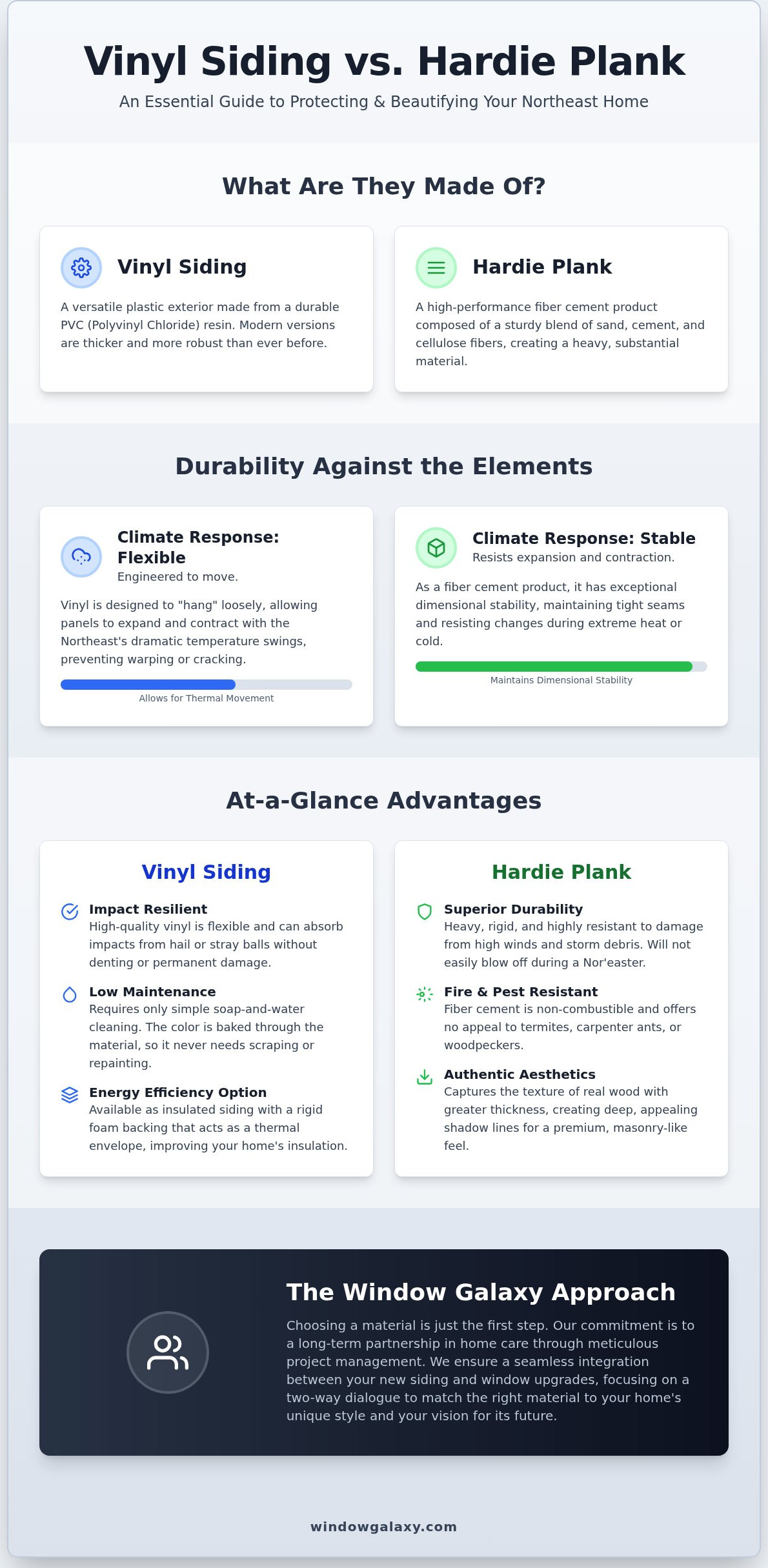
Selecting the right exterior for your home is a major decision that impacts both protection and curb appeal. When you evaluate vinyl siding vs hardie plank, you are looking at two high-performance materials designed to replace traditional wood. Vinyl siding is a versatile, plastic-based exterior made from high-quality PVC resin. In contrast, Hardie plank is a fiber cement product. It is composed of a sturdy blend of sand, cement, and cellulose fibers. Both options are engineered to mimic the look of real wood, but they offer vastly different benefits for your specific needs. Window Galaxy provides premium versions of both materials to ensure your home receives the highest level of protection available.
The Evolution of Modern Vinyl Siding
Modern vinyl is a far cry from the thin panels used decades ago. It is now thicker and much more resistant to fading. This durability helps it stand up to the high winds and debris common in the Northeast. For homeowners who want to boost their home’s energy efficiency, we offer vinyl insulated siding. This version includes a layer of rigid foam insulation that fits snugly behind the siding panel. It acts like a thermal envelope, keeping your home warmer in the winter and cooler in the summer. For more information on the background of this material, Understanding Vinyl Siding explains how the manufacturing process has improved over time. One of the biggest draws is the color variety. The color is baked through the material, so you don’t have to worry about scraping or repainting.
What Makes Hardie Plank Different?
Hardie plank is famous for its heavy, substantial feel. It captures the authentic texture of wood planks with a thickness that creates deep shadow lines. This density offers several unique advantages for your home:
- Fire Resistance: Fiber cement is non-combustible and will not melt or act as fuel for a fire.
- Pest Protection: Unlike wood, this material is unappealing to termites, carpenter ants, and woodpeckers.
- Weather Resilience: It is specifically designed to resist rotting and warping, even in humid coastal environments.
When comparing vinyl siding vs hardie plank, the choice often depends on your priorities for maintenance and aesthetic depth. Hardie plank provides a permanent, masonry-like feel that many homeowners find adds a premium touch to their property. Our project managers work closely with you to determine which material fits your vision and your home’s architectural style. We focus on a two-way dialogue to ensure the final result meets your expectations for both beauty and performance.
Durability and Performance in the Northeast Climate
The Northeast climate presents a unique set of challenges for any home exterior. From the humid summers of the Jersey Shore to the freezing winters in upstate New York, your siding must endure constant environmental stress. When comparing vinyl siding vs hardie plank, the most critical factor is how each material handles thermal expansion. New Jersey temperatures can swing from sub-zero to over 100 degrees Fahrenheit. These dramatic shifts cause building materials to grow and shrink. Without professional installation and the right material choice, these cycles can lead to gaps, warping, or structural damage over time.
Weathering the Four Seasons
Hardie plank is prized for its dimensional stability. Because it is a fiber cement product, it does not expand or contract significantly during extreme temperature swings. This stability helps maintain tight seams and prevents the cracking often discussed in unverified online forums. Conversely, vinyl siding is engineered to move. It is designed to “hang” on your home rather than being nailed tightly to the studs. This allows the panels to breathe and slide as temperatures change. Our team at Window Galaxy ensures every panel has the necessary room to maneuver. We also prioritize proper flashing around windows and doors. This prevents water infiltration, which is the leading cause of structural rot in coastal environments.
Long-Term Resilience and Strength
Resistance to impact and high winds is another vital consideration for homeowners in our region. Hardie plank is heavy and rigid, offering excellent protection against storm debris and high-velocity winds. It will not blow off easily during a Nor’easter. Vinyl siding offers a different type of resilience. High-quality vinyl is flexible. It can often absorb the impact of a stray baseball or hail without denting or permanent damage. Modern vinyl also features advanced UV resistance. This technology ensures your color stays vibrant for years despite direct sun exposure.
Ultimately, the performance of your siding depends on the quality of the installation. Even the best materials will fail if the seals are not weather-tight. Our project managers oversee every detail to ensure your exterior acts as a cohesive shield. We use a methodical approach to project oversight, ensuring that every corner and transition is sealed against the elements. This meticulous attention to detail is what prevents moisture from reaching your home’s framing. If you are ready to see how these materials look on your property, you can explore our siding options to find the perfect fit. We focus on two-way dialogue to make sure your home is prepared for whatever the Northeast seasons bring. Our goal is your total peace of mind through every storm.
Aesthetics and Curb Appeal: Choosing Your Style
Curb appeal is about much more than just a fresh coat of color. It’s the first impression your home makes on the neighborhood and a reflection of your personal style. When you weigh the benefits of vinyl siding vs hardie plank, the aesthetic “reveal”-the visible width of the siding plank-often becomes the deciding factor. Each material offers a distinct visual profile that can either blend into a traditional neighborhood or make a bold, modern statement. At Window Galaxy, we believe your home’s exterior should be a source of pride, not a compromise.
The Visual Profile of Hardie Plank
Hardie plank offers a texture that is nearly indistinguishable from real cedar. It features deep wood grain patterns that look authentic even from a close distance. This material is a favorite for historic Colonial homes or Craftsman-style builds throughout New Jersey and Pennsylvania. The planks are thick, which creates crisp, heavy shadow lines. These lines add architectural depth that thinner materials sometimes lack. In 2026, we see a strong trend toward darker, sophisticated tones. Iron Gray, the James Hardie Color of the Year for 2026, provides a striking, contemporary look that pairs beautifully with crisp white trim. For those who want the warmth of natural timber, the new TimberHue™ Collection offers a realistic wood appearance without the constant upkeep of staining. Arctic White remains a top choice, appearing in 31% of modern farmhouse designs this year due to its clean, timeless feel.
Design Versatility with Premium Vinyl
Premium vinyl provides incredible design flexibility for any architectural style. It is not limited to standard horizontal boards. You can choose from various profiles like Dutch lap, which has a distinct decorative groove, or traditional clapboard. If you love the look of a seaside cottage, vinyl shakes offer the texture of wood shingles with significantly less maintenance. Modern manufacturing ensures that through-body color remains consistent across the entire project. This means the pigment is integrated throughout the PVC resin, so minor scratches don’t reveal a different shade underneath. For modern, minimalist homes, we often recommend smooth vinyl options that provide a sleek, clean aesthetic. The variety of available colors allows you to match your siding perfectly to your Galaxy Vinyl Windows for a cohesive, finished look.
Choosing a color and style can feel like a high-stakes gamble. You don’t want to regret your choice once the first few rows of siding are installed. That’s why we treat the design phase as a collaborative partnership. Our project managers help you visualize how different textures and colors will interact with your home’s unique lines. We look at the scale of your house to determine the best plank width and trim details. We prioritize a two-way dialogue to take the stress out of the design phase, ensuring you feel confident in your home’s new look before the work even begins.
Maintenance and Longevity: The Homeowner’s Reality
Owning a home in the Northeast means dealing with salt air, seasonal pollen, and industrial grime. You want an exterior that stays sharp without demanding all your free time. When comparing vinyl siding vs hardie plank, the long-term maintenance schedule is usually the deciding factor for busy families. Both materials are built for durability, but they require different levels of attention to stay in peak condition over the decades. Our project managers at Window Galaxy help you weigh these realities against your lifestyle goals.
The Low-Maintenance Promise of Vinyl
Vinyl is the undisputed champion of “set it and forget it” home exteriors. It never needs painting or staining because the color is integrated directly into the PVC resin during manufacturing. This through-body color means minor surface scratches are virtually invisible. You don’t have to worry about the finish peeling or chipping after a harsh winter. Most homeowners find that a simple annual cleaning is all that’s required. A garden hose, a soft brush, and mild soap will easily remove dust and pollutants. It is a straightforward solution for those who want to maximize their curb appeal with minimal effort.
Preserving the Beauty of Fiber Cement
Fiber cement is often misunderstood regarding its upkeep. Some sources suggest it needs frequent painting, but modern finishes have extended that timeline significantly. James Hardie’s ColorPlus® Technology comes with a 15-year warranty against fading, chipping, peeling, and cracking. This means you can enjoy a vibrant, factory-finished look for a decade and a half before even considering a touch-up. The most critical maintenance task for Hardie plank is inspecting the caulked joints. These joints act as a vital moisture barrier. They should be checked periodically to ensure the seal remains intact. Because fiber cement is a heavy, substantial material, it relies on professional installation to stay perfectly aligned as the years pass.
With expert installation from Window Galaxy, both materials offer impressive longevity. Hardie plank typically boasts a lifespan of 30 to 50 years. High-quality vinyl options generally last between 20 and 40 years. We stand behind every project with meticulous oversight to ensure your siding is installed to exceed standard requirements. We don’t just finish a job and disappear; we are your partners in maintaining your home’s value. If you are ready to choose a material that fits your long-term vision, contact Window Galaxy for a professional consultation today. Our team is ready to provide the clear, honest guidance you deserve for your home improvement journey.
The Window Galaxy Approach to Siding Replacement
Choosing between vinyl siding vs hardie plank is only half the battle. The other half is ensuring the installation is handled by a team that understands the structural nuances of Northeast homes. At Window Galaxy, we don’t just sell materials; we manage full exterior transformations. We serve homeowners across NJ, PA, CT, NY, and DE with a focus on meticulous project oversight and clear communication. Our goal is to take the stress out of home improvement by acting as your dedicated project partner from the first consultation to the final inspection.
Synergy Between Windows and Siding
Your home’s windows and siding are its primary defense against moisture and air infiltration. When you upgrade your siding, it is the ideal time to evaluate the performance of your replacement windows. These two systems must work in harmony to protect your home’s structural integrity. Ensuring a proper, weather-tight seal at the window-siding interface is critical. If these components aren’t integrated correctly, even the most premium materials won’t prevent water from leaking into your wall cavities. We create a unified aesthetic for your home’s exterior, ensuring your Galaxy Vinyl Windows or Andersen options perfectly complement your new Hardie or vinyl exterior.
Your Project, Our Priority
We know that a siding renovation can feel like a massive undertaking. To alleviate this burden, we assign a dedicated project manager to provide hands-on oversight for every job. They ensure that every plank is installed to exact manufacturer specifications and our own high standards for accuracy. We prioritize a two-way dialogue throughout the entire process. This means we don’t just provide updates; we listen to your needs and answer your questions promptly. This collaborative exchange ensures you always know the status of your project and feel confident in the workmanship being performed on your property.
Our regional expertise in Northeast weather patterns means we understand how to protect your home’s long-term value. We help you navigate the vinyl siding vs hardie plank debate by analyzing your specific location and architectural style. Whether you choose the low-maintenance appeal of vinyl or the substantial feel of fiber cement, we apply the same level of punctuality and interpersonal respect to every interaction. We stand by our definitive ethical pledges of reliability. Our commitment is to your peace of mind, providing a stress-free experience that exceeds standard industry requirements. We are here to ensure your home remains a beautiful, protected sanctuary for your family.
Transform Your Home’s Exterior with Confidence
Deciding between vinyl siding vs hardie plank is a significant step toward protecting your home and enhancing its curb appeal. Whether you prioritize the low-maintenance ease of premium vinyl or the substantial, wood-like texture of Hardie plank, your choice should align with your lifestyle. It’s vital to remember that the longevity of these materials depends on a weather-tight installation that can withstand the unique challenges of the Northeast climate. A beautiful exterior is only as good as the project management behind it.
Schedule your free exterior consultation with Window Galaxy today! We look forward to helping you make the best choice for your home’s future.
Frequently Asked Questions
Is vinyl siding or Hardie plank better for resale value?
Hardie plank generally offers a higher return on investment because of its durability and premium wood-like appearance. However, high-quality insulated vinyl also improves value by boosting energy efficiency and curb appeal. Both options are superior to aging or damaged siding. Our project managers help you evaluate which choice aligns best with the current real estate market in your specific Northeast neighborhood.
How do I know if my existing siding needs to be replaced?
Visible signs like warping, cracking, or persistent mold indicate your home’s protective envelope is failing. You should also check for interior signs like peeling wallpaper or unexpectedly high energy bills. If you notice soft spots in the wood underneath or panels pulling away from the house, it is time for a professional inspection. We prioritize a meticulous assessment to ensure your home remains weather-tight.
Can Hardie plank be installed over my current siding?
No, we don’t recommend installing fiber cement over existing siding because it requires a flat, stable surface for proper attachment. A full tear-off allows our team to inspect the underlying sheathing for rot or insect damage. This thorough approach ensures your new exterior is secure and performs as intended. We manage the entire removal and disposal process to keep your project stress-free and organized.
Does vinyl siding provide any insulation for my home?
Standard vinyl offers minimal insulation, but vinyl insulated siding features a built-in foam backing that significantly improves thermal performance. This added layer reduces thermal bridging by covering the wooden studs of your home. It helps maintain a consistent indoor temperature during harsh New Jersey winters. When comparing vinyl siding vs hardie plank, this thermal boost is a major benefit for energy-conscious homeowners.
Is fiber cement siding fireproof?
Fiber cement is considered non-combustible and will not ignite when exposed to direct flame. While no material is entirely fireproof under extreme conditions, Hardie plank does not provide fuel for a fire. This safety feature can even lead to lower homeowner insurance premiums in some regions. It offers an extra layer of security for your family that traditional wood or standard plastic materials simply cannot match.
Which siding material is better for the New Jersey climate?
Both materials are excellent for our region when installed with the correct techniques to handle thermal expansion. Hardie plank offers superior dimensional stability during rapid temperature shifts. Vinyl insulated siding provides a flexible, impact-resistant shield that handles coastal humidity well. The best choice for vinyl siding vs hardie plank often depends on your home’s proximity to the ocean and your specific architectural goals.
How long does a typical siding replacement project take?
Most siding replacement projects are completed within one to two weeks, depending on the size of your home and the weather. Fiber cement installation usually takes slightly longer than vinyl because the material is much heavier and requires specialized cutting tools. We provide clear, daily communication so you always know the status of your project. Our organized approach ensures we respect your time and property throughout the process.
